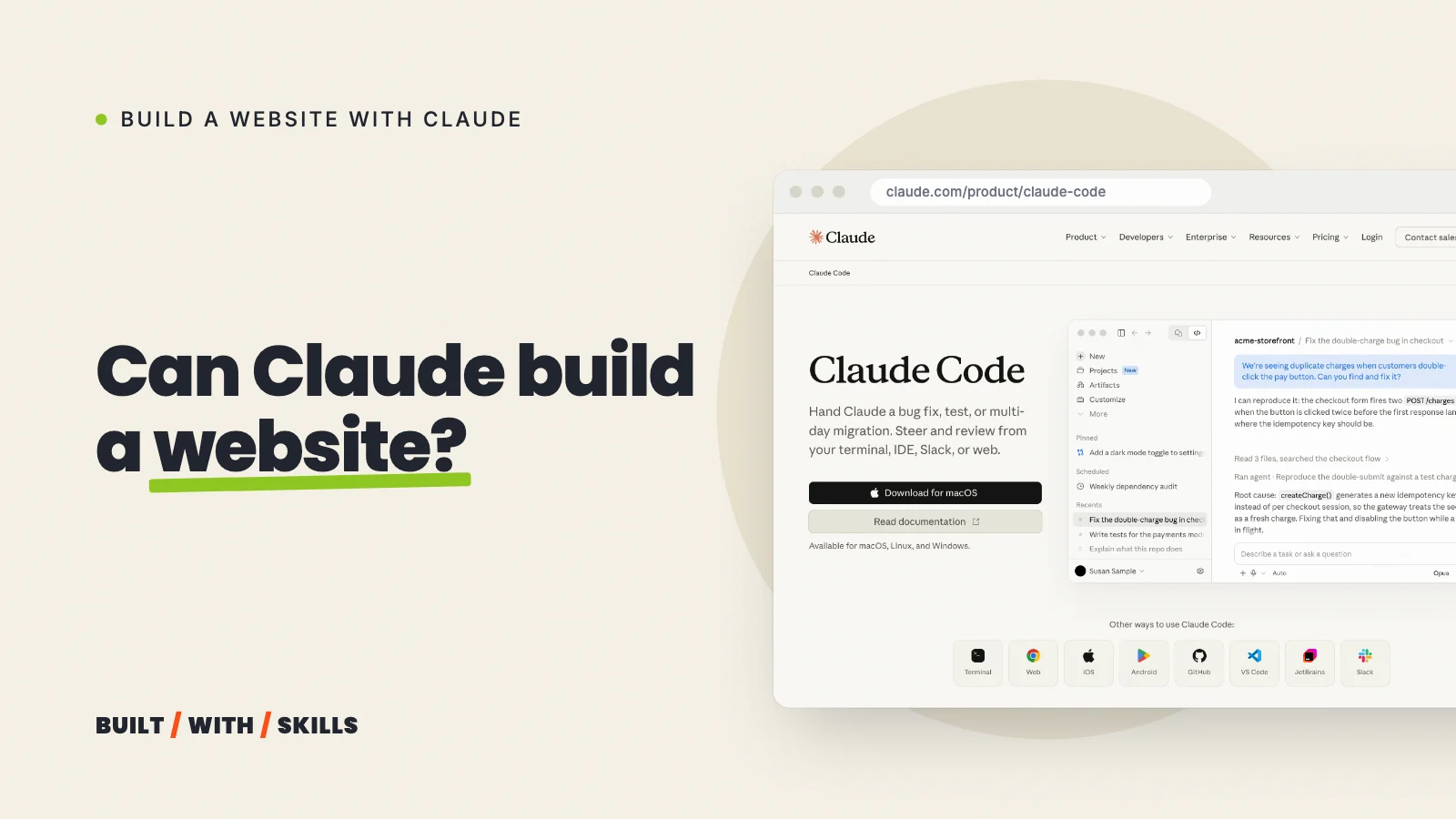

Yes, Claude can build a website. Whether you end up with one you can put on your own domain depends entirely on which part of Claude you ask, because the free chat, Claude Design and Claude Code all answer “build me a website” with something different, and only one of them hands you a site you own.
That part is Claude Code. We built this site with it, so the advice below comes from a real build (plus Anthropic’s own help pages, checked in October 2026, for the plan details).
By the end, you’ll know:
- what each part of Claude makes when you ask for a website, and which plan it needs
- why a chat artifact stopped being a shareable web page in September 2026
- the jobs Claude can’t do for you, however good the build is
- whether Google will rank what it makes
Four parts of Claude, four different answers#
When people ask whether Claude can build a website, they usually mean one of these four, and each gives a different answer:
| Part of Claude | What you get when you ask for a website | On your own domain? | Plan |
|---|---|---|---|
| A chat artifact | One page beside the conversation | No | Every plan, including Free |
| Claude Design | A landing page or prototype on a canvas, exported as HTML or sent to a host like Netlify | Only by moving it to a host | Every plan, including Free |
| Claude Code | A complete multi-page site, as files in a folder on your computer | Yes, on any host | Pro and above |
| Claude Code on the web | The same, working on a GitHub repository from claude.ai/code | Yes, on any host | Pro, Max, Team, Enterprise |
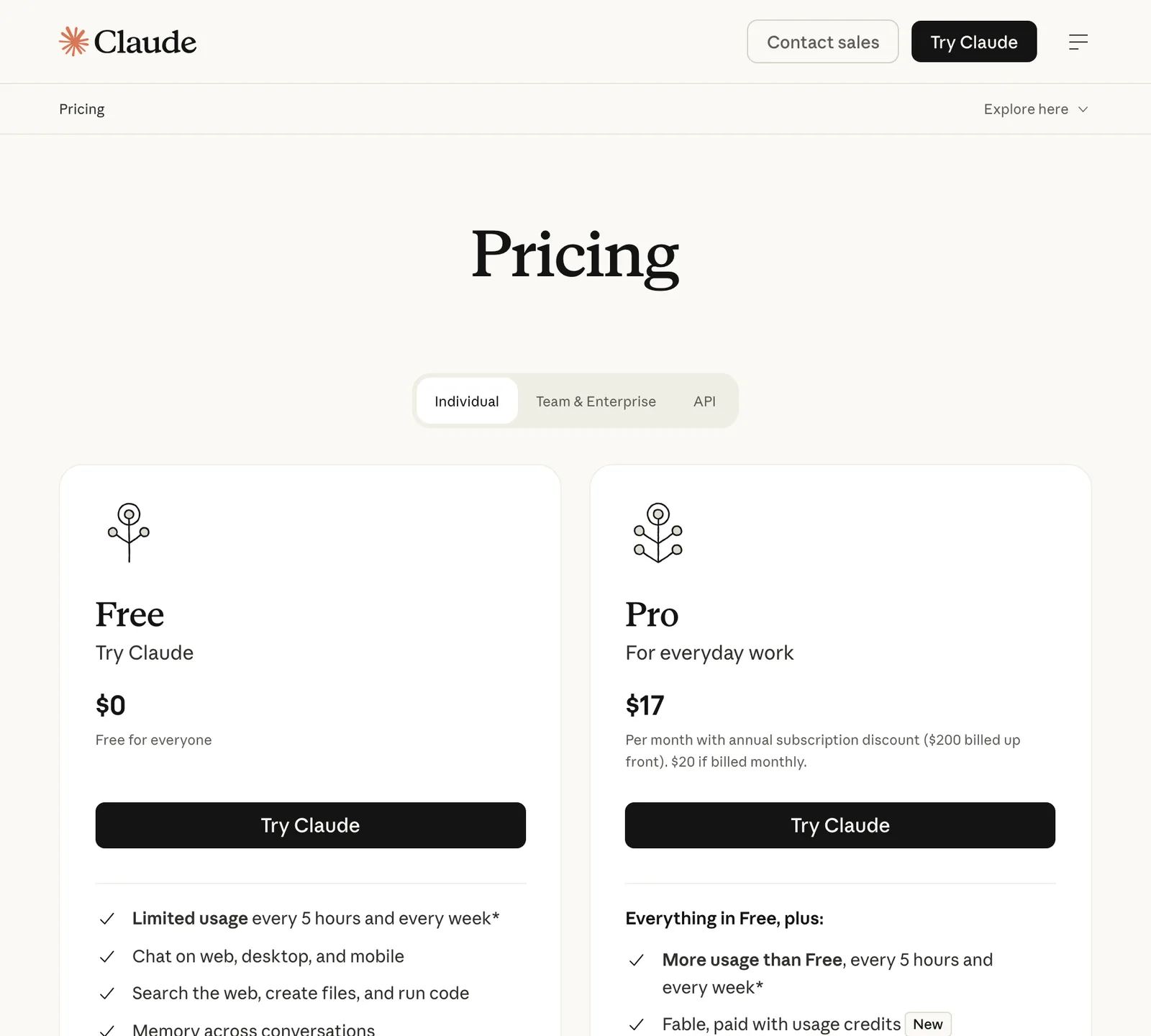
Plans as of October 2026, from Anthropic’s pricing page and help centre. Pro is $20 a month, or $200 a year.
Chat artifacts changed in September 2026#
Ask the chat for a landing page for your bake sale and you’ll get one. It’s built in a panel next to the conversation, and you tweak it by asking.
Most guides then tell you to click Publish and send the public link to anyone. That stopped being true on 16 September 2026.
Anthropic’s help page on what artifacts are now calls anything made in a chat before that date a “legacy artifact”, and its page on sharing artifacts sets out the rules for everything since. Free plans can’t share a new artifact by link at all. On Pro and above you can, but everyone who opens it needs a Claude account, because “people without one can’t open a shared artifact, even with the link.”
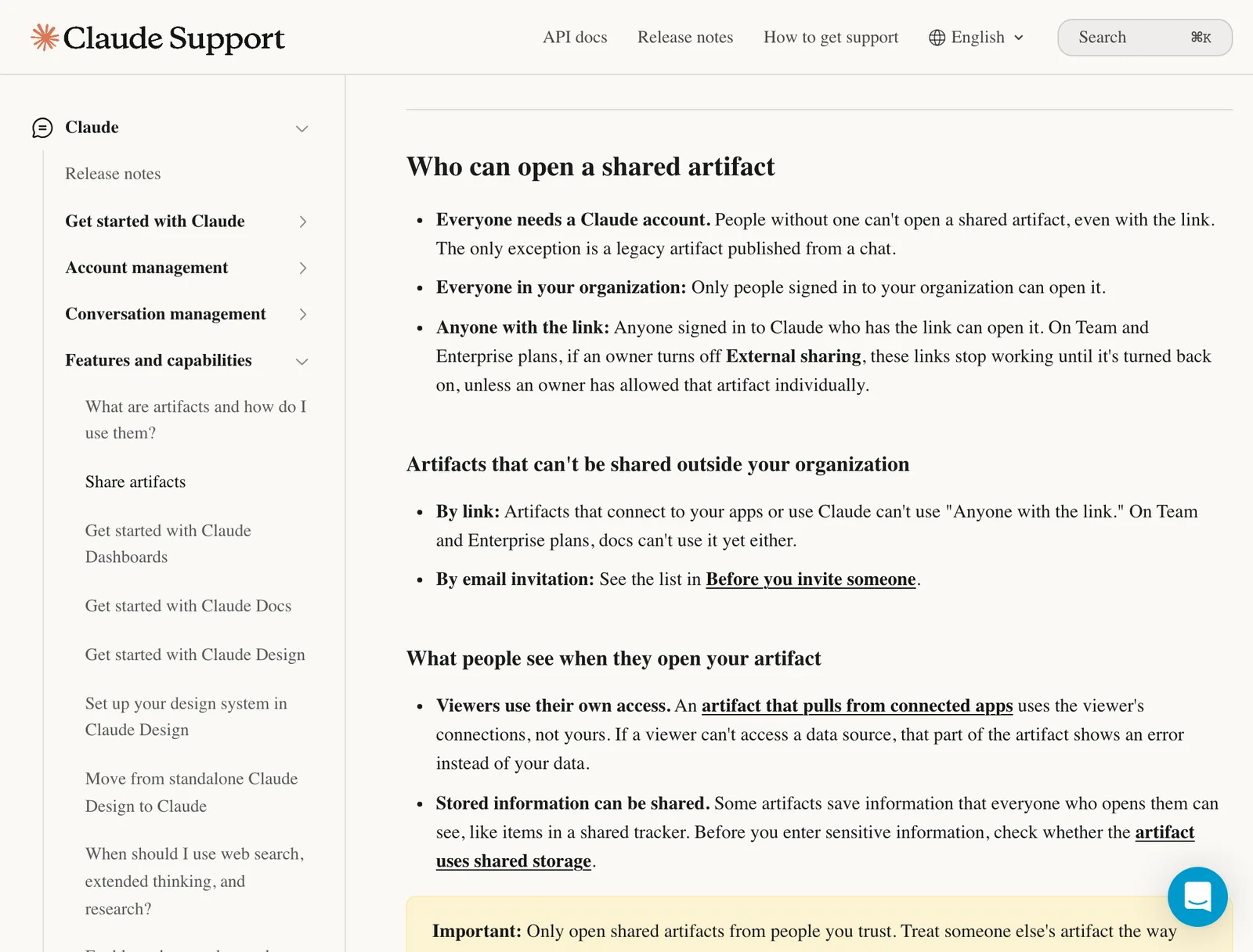
Read that again if you were planning to send customers there. Most of them don’t use Claude, so most of them can’t see the page.
Artifacts published before the change still open for anyone, and can still be embedded on another site, but you can’t make new ones. Anthropic’s pages don’t describe putting an artifact on your own domain either, and the Claude Code docs call one “one self-contained page with no backend.”
Use an artifact to show someone an idea. Don’t use it as your website.
Claude Design gets you a page, not a home for it#
Claude Design is the visual side. You describe a landing page or a prototype, it appears on a canvas, and you refine it by chatting or by editing the canvas directly.
It now runs inside ordinary Claude chats on every plan, Free included. (The old standalone site at claude.ai/design closes on 14 December 2026.)
It gets closer to a website than a chat artifact does. Anthropic’s Claude Design guide lists an export as standalone HTML, and a button that sends the design to hosts such as Netlify. A single page can reach the open web that way.
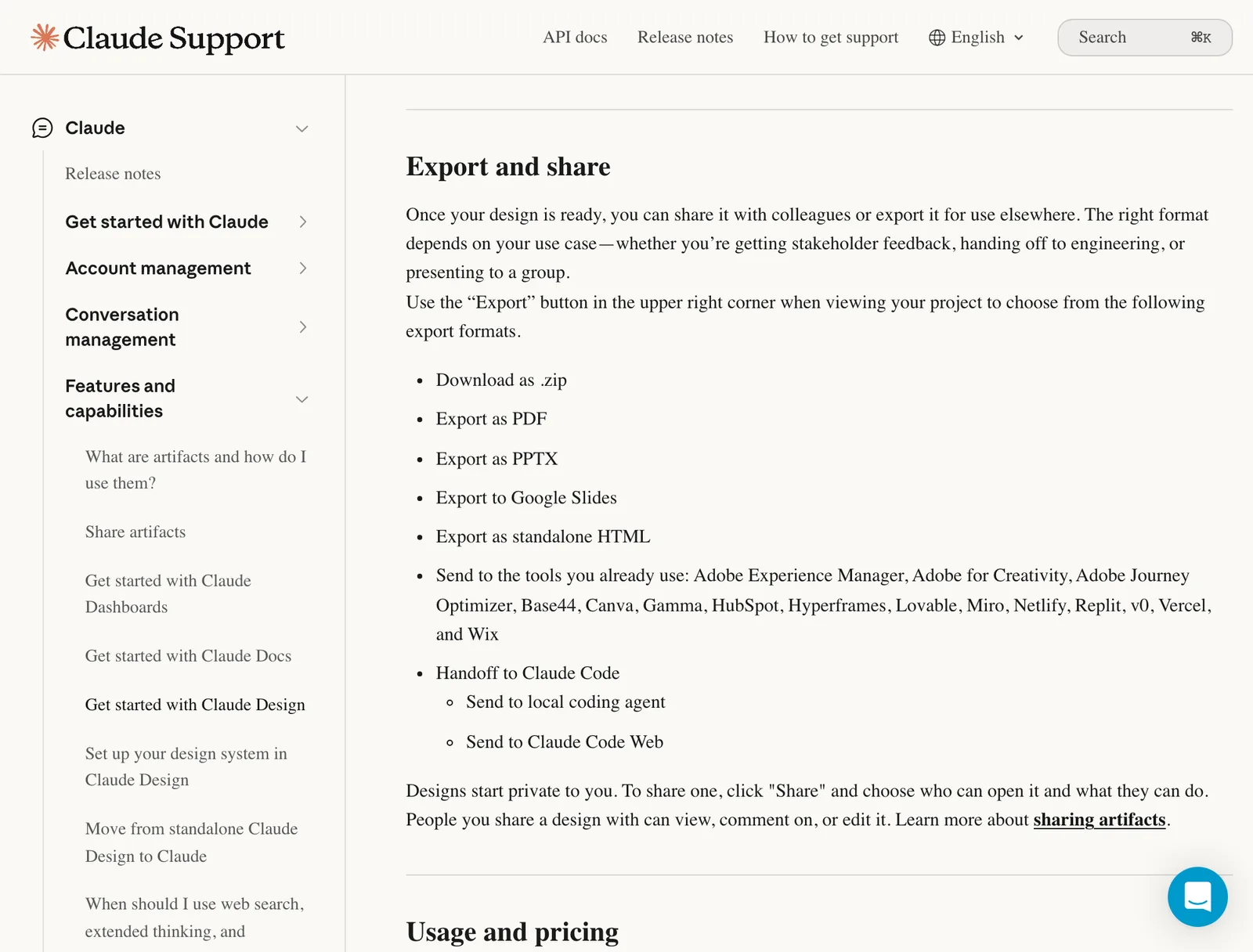
What it doesn’t give you is a site to keep. One page off a canvas is a long way from a set of linked pages you’ll edit for years. For that, Anthropic offers a handoff to Claude Code, which carries on from the design instead of starting again from a screenshot.
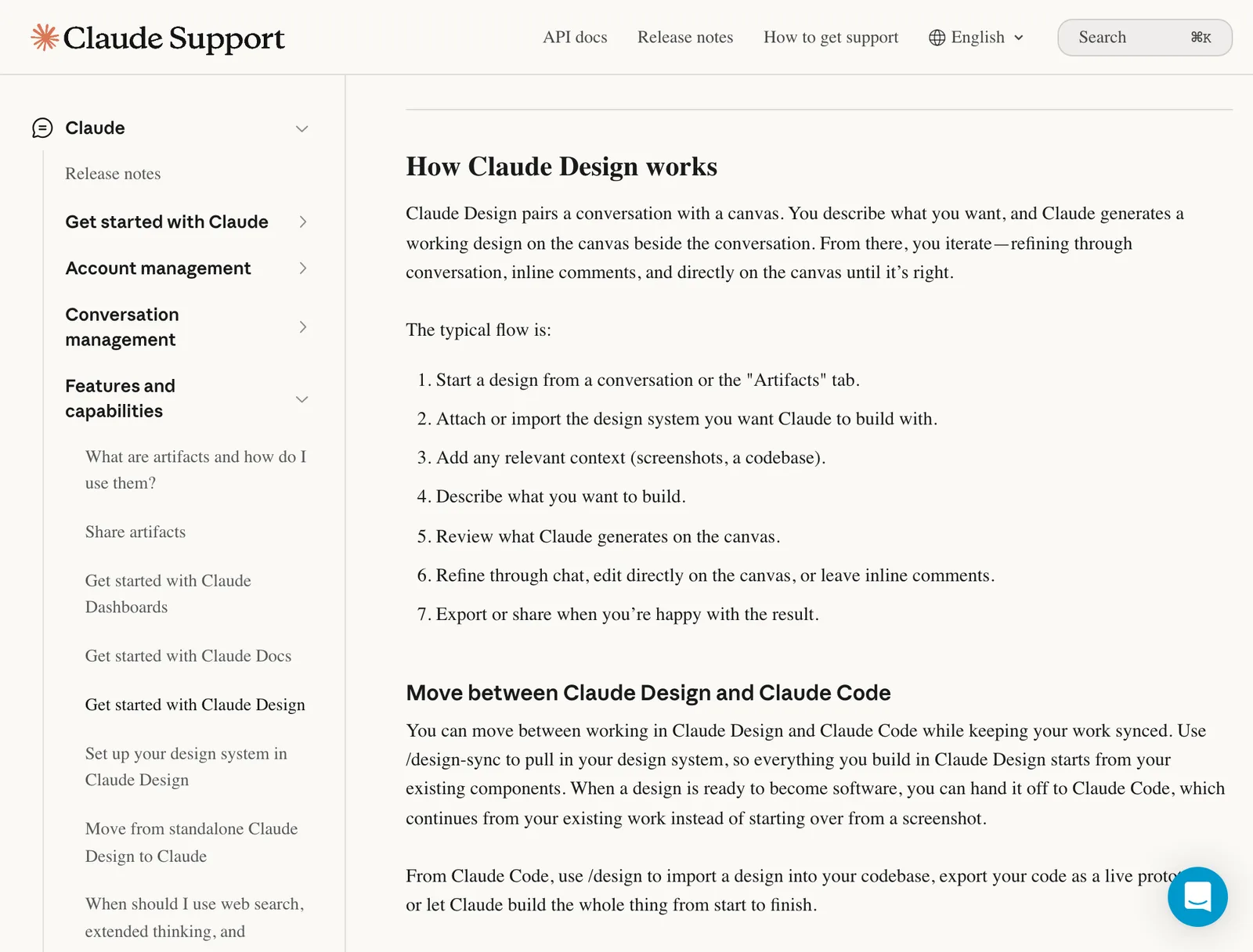
We haven’t built a site end to end in Claude Design, so that’s Anthropic’s description rather than our test. How to use Claude Design goes through it step by step.
Use it to explore the look, then build in Claude Code.
Claude Code builds the real thing#
Claude Code is the version of Claude that works inside a folder on your computer. It reads and writes files there and runs the commands that turn those files into a working site.
In practice, you describe the business and the pages you want, ask for a plan before any code, push back on the parts that are wrong, and then let it build one page at a time while a preview runs in your browser, so you can open each page on your laptop and your phone and tell it exactly what to fix.
What you end up with is ordinary HTML, CSS and JavaScript (usually produced by a free site builder such as Astro). Any host can serve it, any editor can open it, and it keeps working after you stop paying for Claude.
The files are yours, not Claude’s.
This site is the proof we can offer. The project started on 3 August 2026, and by 25 October it had 86 commits (saved snapshots of the work), 24 of them with Claude Code credited as co-author. It runs on Astro and Tailwind.
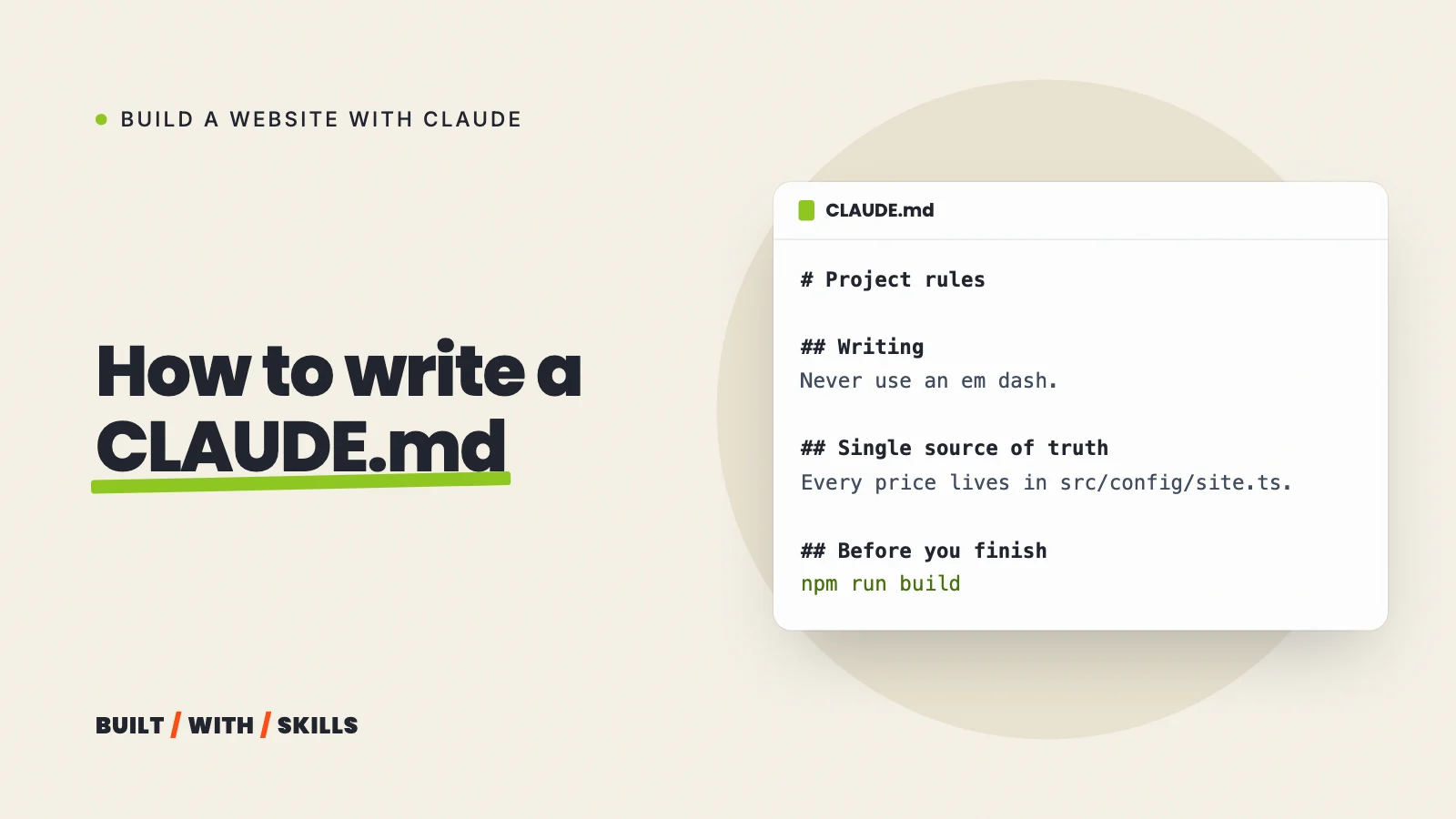
A file called CLAUDE.md holds the standing rules Claude reads at the start of every session, and two of ours are “never use an em dash” and never fill a placeholder “with a plausible-sounding number, quote or claim.” For sites other people have built with it, and how each one went, see Websites built with Claude Code.
git log --reverse --format='%ad %s' --date=short | head -12026-08-03 Initial commitgit rev-list --count --before=2026-10-26 HEAD86git log --before=2026-10-26 -i --grep='Co-Authored-By: Claude' --oneline | wc -l24
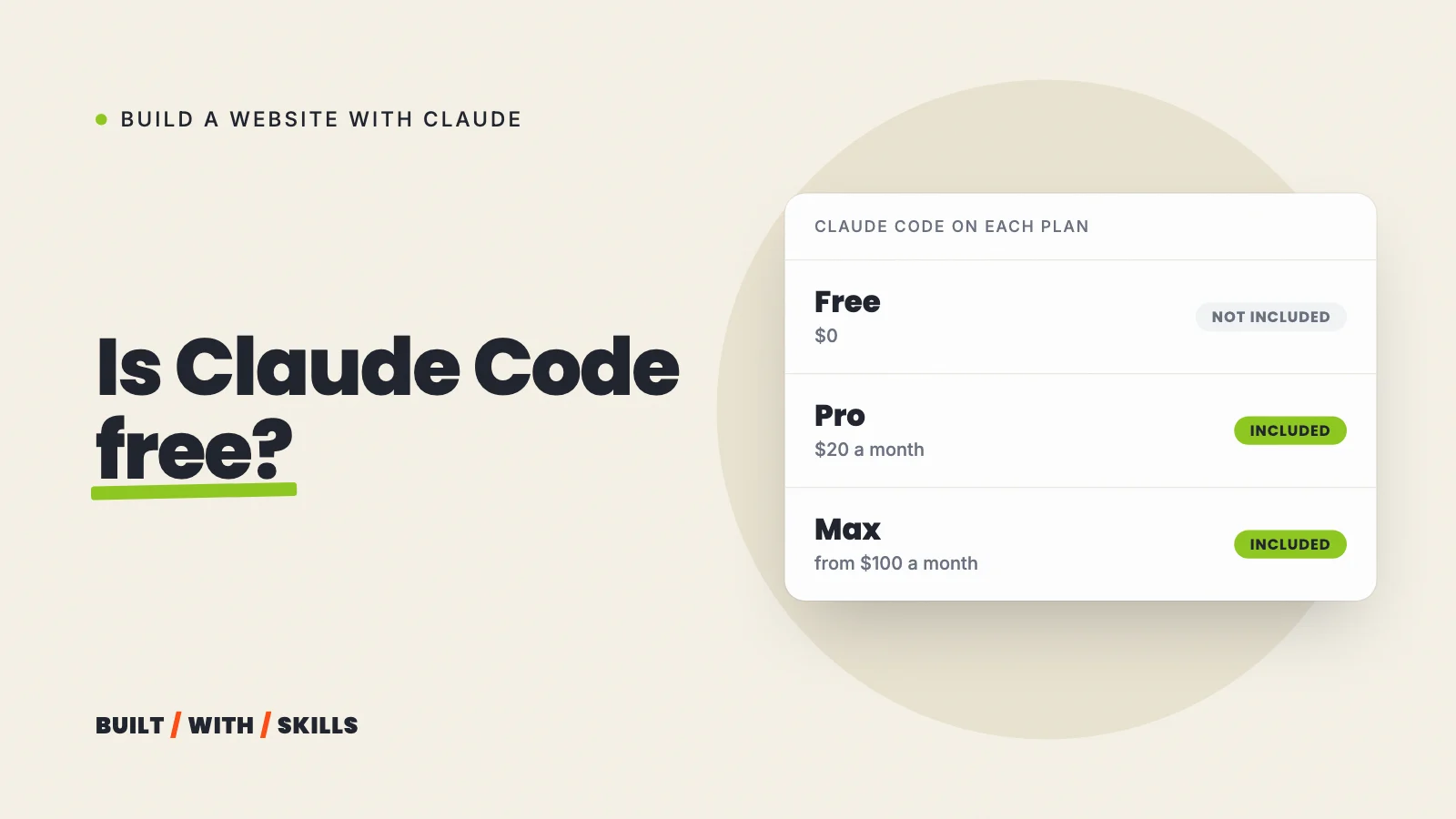
Claude Code isn’t on the free plan; Pro is the cheapest way in. Is Claude Code free? compares every plan.
What stays your job#
Claude builds what you describe, and that’s the catch: it doesn’t know your business, and it’s quick to say a job is done when it isn’t. These five jobs stay with you.
- Decide what the site is for. Who it’s for, and the one thing a visitor should do (book, buy, call or sign up). A vague brief gets a vague site.
- Supply the truth. Your prices, your story, your photos and your real reviews. Left to fill a gap, Claude will write a plausible testimonial or a made-up statistic, which is a legal problem as well as a trust one, and the reason that placeholder rule is in our
CLAUDE.md. - Check every page. On a phone as well as a laptop. Click every link, read every price and phone number, and after a long request ask it to list anything it skipped.
- Open the accounts. Claude can’t buy a domain or sign you up to a host, but once you have both it can do most of the setup between them.
- Tell Google the site exists, through Google Search Console, and submit your sitemap.
It also won’t raise what you didn’t ask about. Shops and member areas are both possible in Claude Code, but they need payments and security that someone has to check, and a beginner usually can’t. Start with a site that shows people what you do and how to get hold of you.
Then there’s the usage limit, which every Claude plan has. A long build session can hit it before you’re finished, and then you wait for the reset or upgrade.
Claude does the building. You do the deciding and the checking.
Will Google rank it?#
Yes, if the pages deserve to rank. Google’s own guidance on AI-generated content says its systems focus “on the quality of content, rather than how content is produced.” The same post draws the line: using automation, AI included, “to generate content with the primary purpose of manipulating ranking in search results is a violation of our spam policies.”
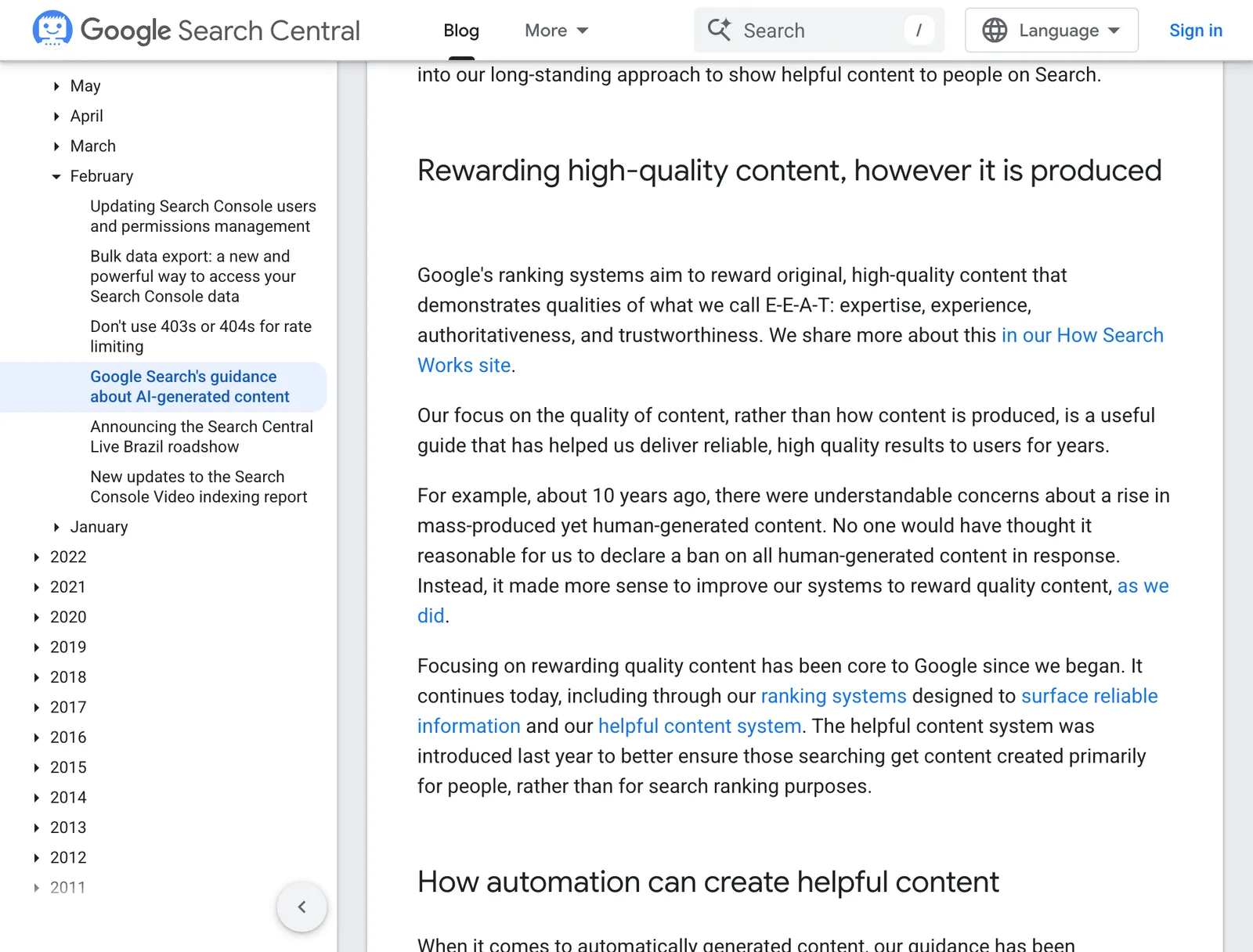
So how the code got written isn’t the issue. A fast static site with a clear page for each thing you sell, written about your real business in your own words, is a good start.
The risk is the shortcut Claude makes easy, which is a pile of near-identical pages for every town nearby, churned out to catch searches. That’s spam whoever types it.
Claude Code does handle the technical side well, if you ask (page titles, a sitemap, sensible headings). Claude SEO skills covers the checks worth running before you submit.
Claude or a website builder?#
It comes down to what you want from the site.
If you want something online this afternoon and never want to think about it again, a hosted builder such as Wix or Squarespace is simpler, because the editor and the hosting come together for one monthly fee. If you want a site you own outright, that costs next to nothing to host and that you can change by asking, Claude Code is the better tool, and it’s the one we teach.
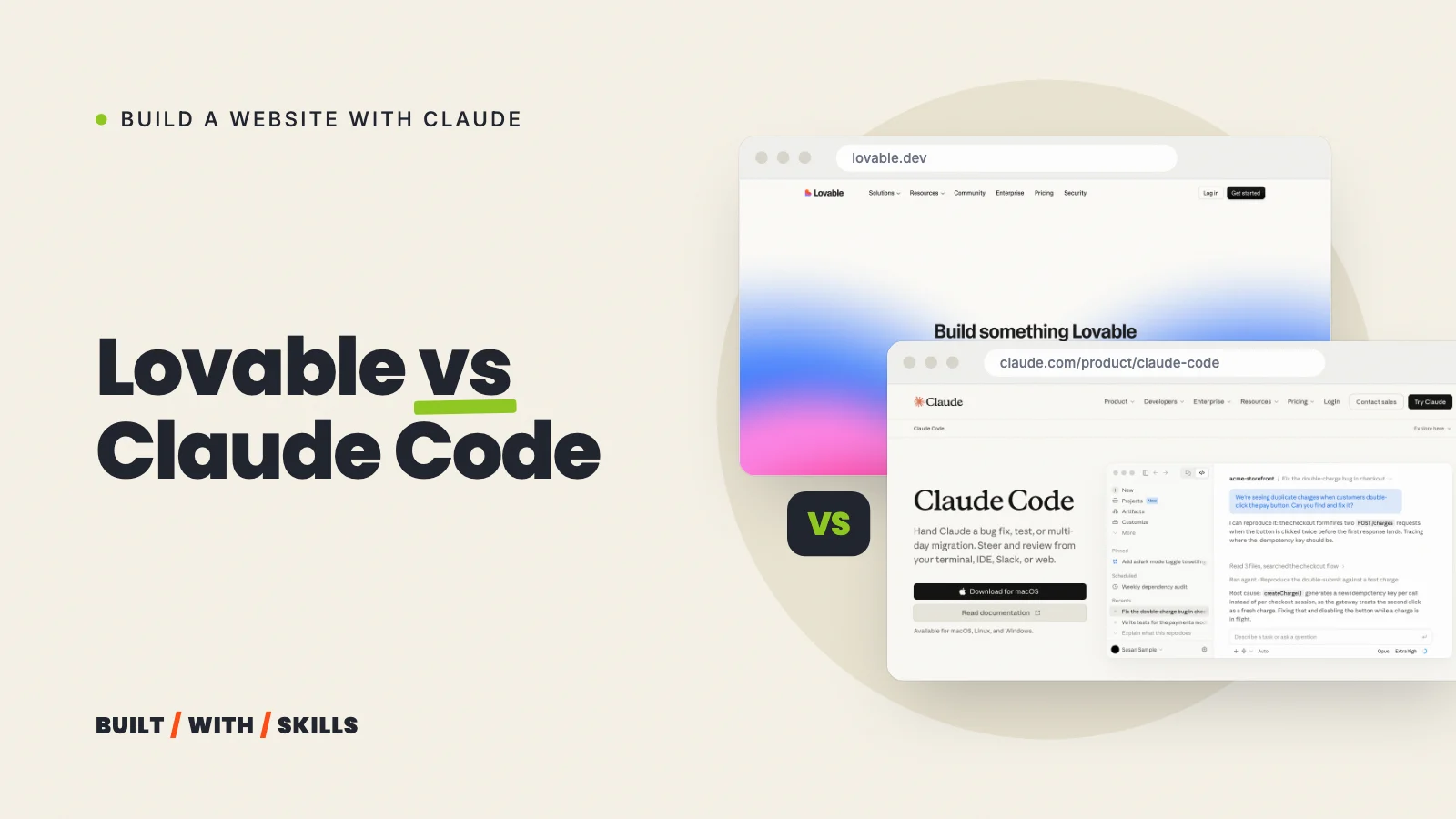
Comparing it with an AI app builder instead? Lovable vs Claude Code sets the two side by side.
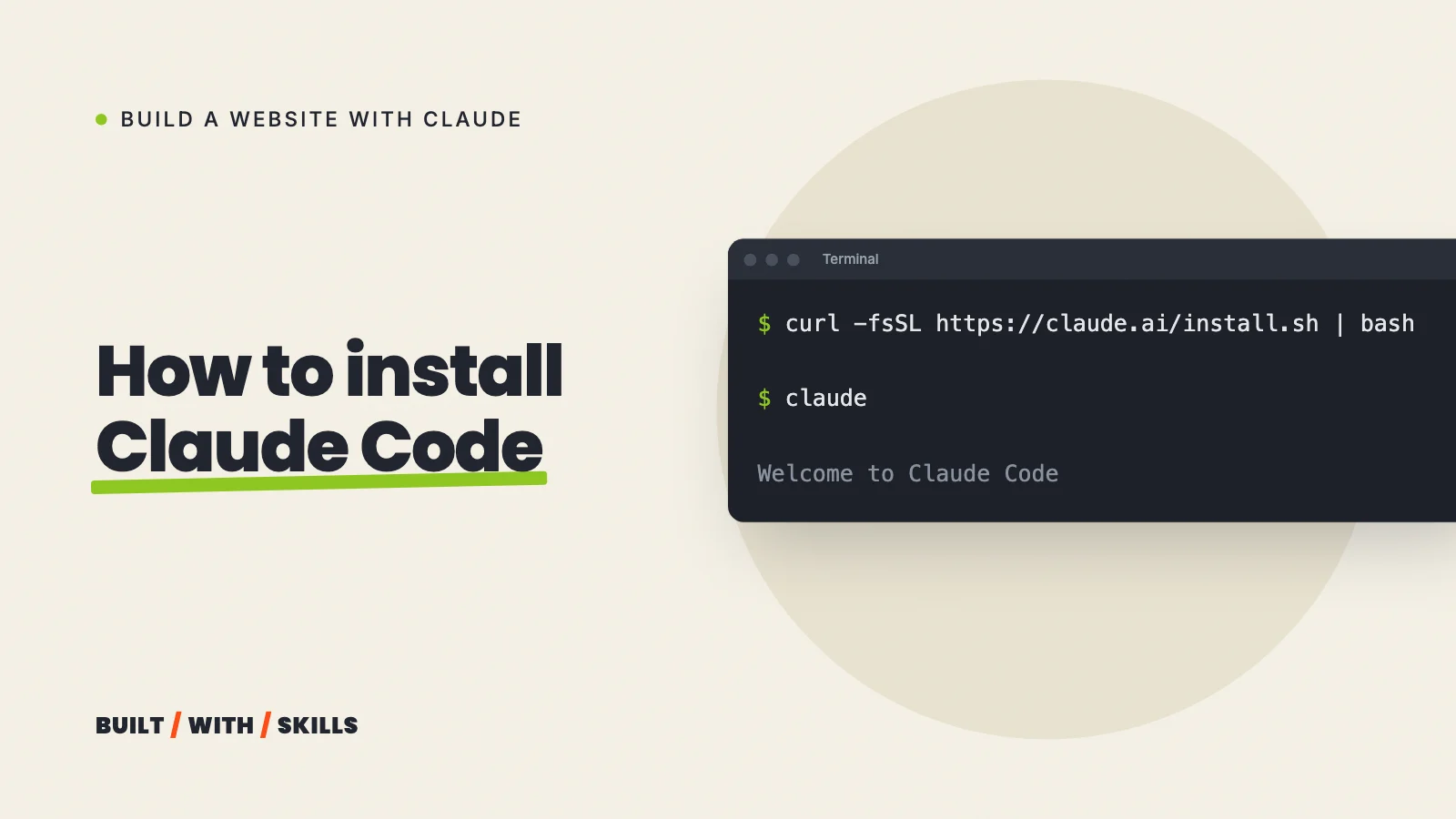
Never opened a terminal? Start with Claude Code for beginners, which covers the install and the first session. Then how to build a website with Claude takes you from an empty folder to a live site on your own domain.