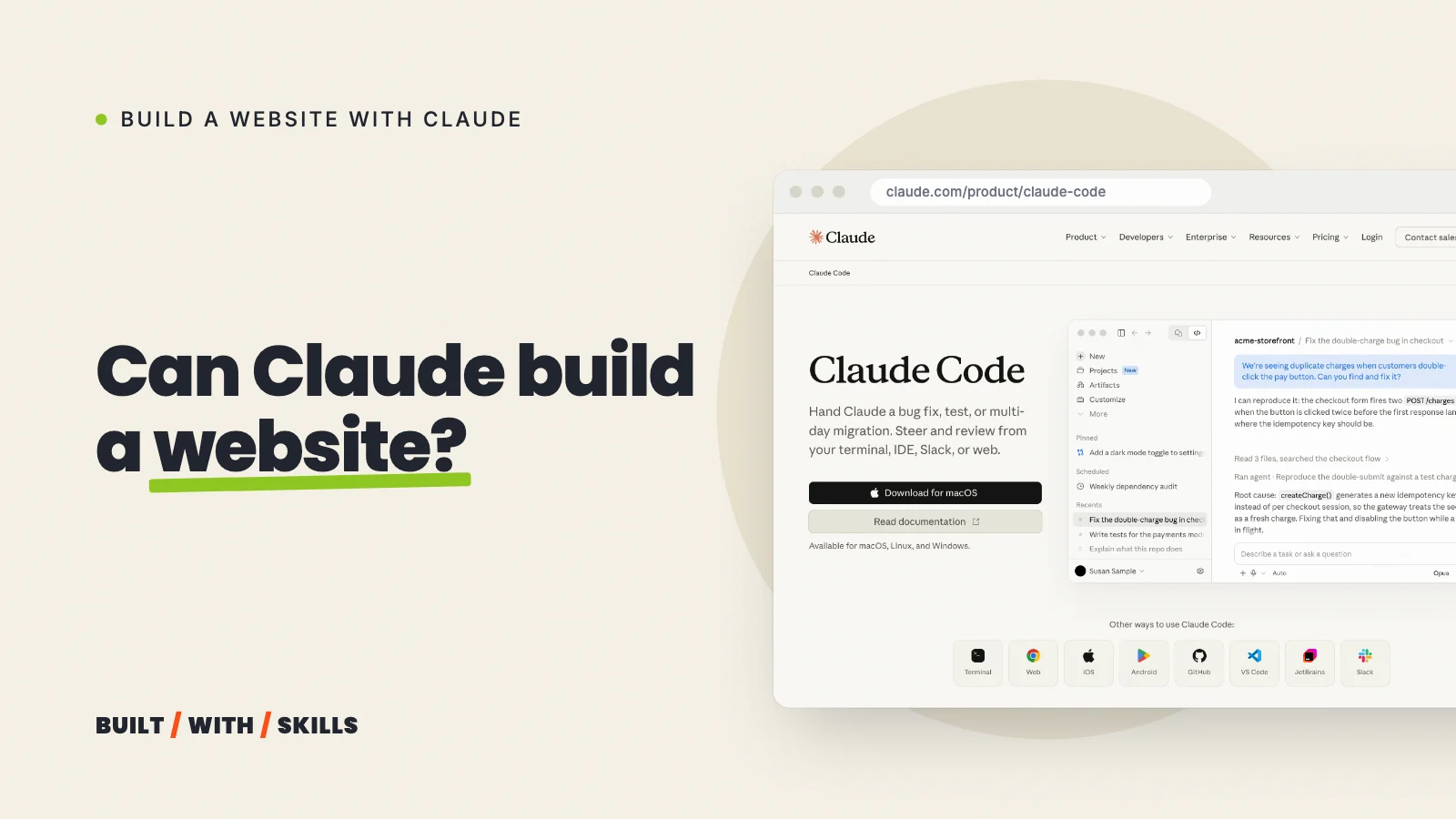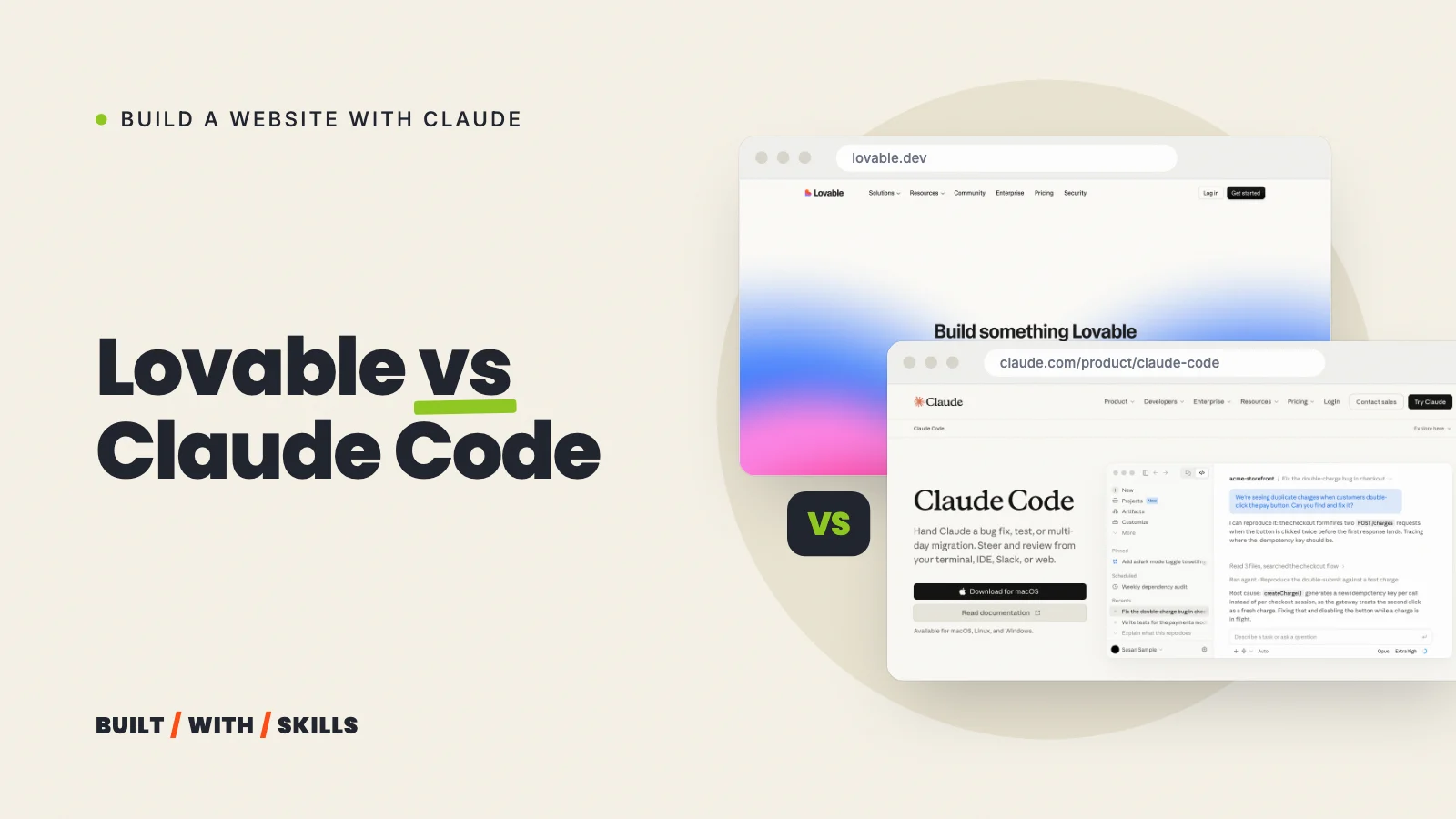

For a typical small-business website (a handful of pages, a contact form, something people find on Google), we’d use Claude Code. For a quick app with user accounts and a database, Lovable gets you there faster.
Both build software from plain-English instructions. Where they differ is where the work lives and how you pay for it. Lovable builds and hosts your app in its own browser workspace and charges credits for each change, while Claude Code edits ordinary files on your computer for a flat monthly plan and leaves the hosting to you.
Lovable starts with a prompt box in your browser. This is what typing a request into it looks like:
Full disclosure: we build our sites with Claude Code and haven’t built one with Lovable. Everything about Lovable here comes from its documentation and pricing page, checked in October 2026.
Side by side#
| Lovable | Claude Code | |
|---|---|---|
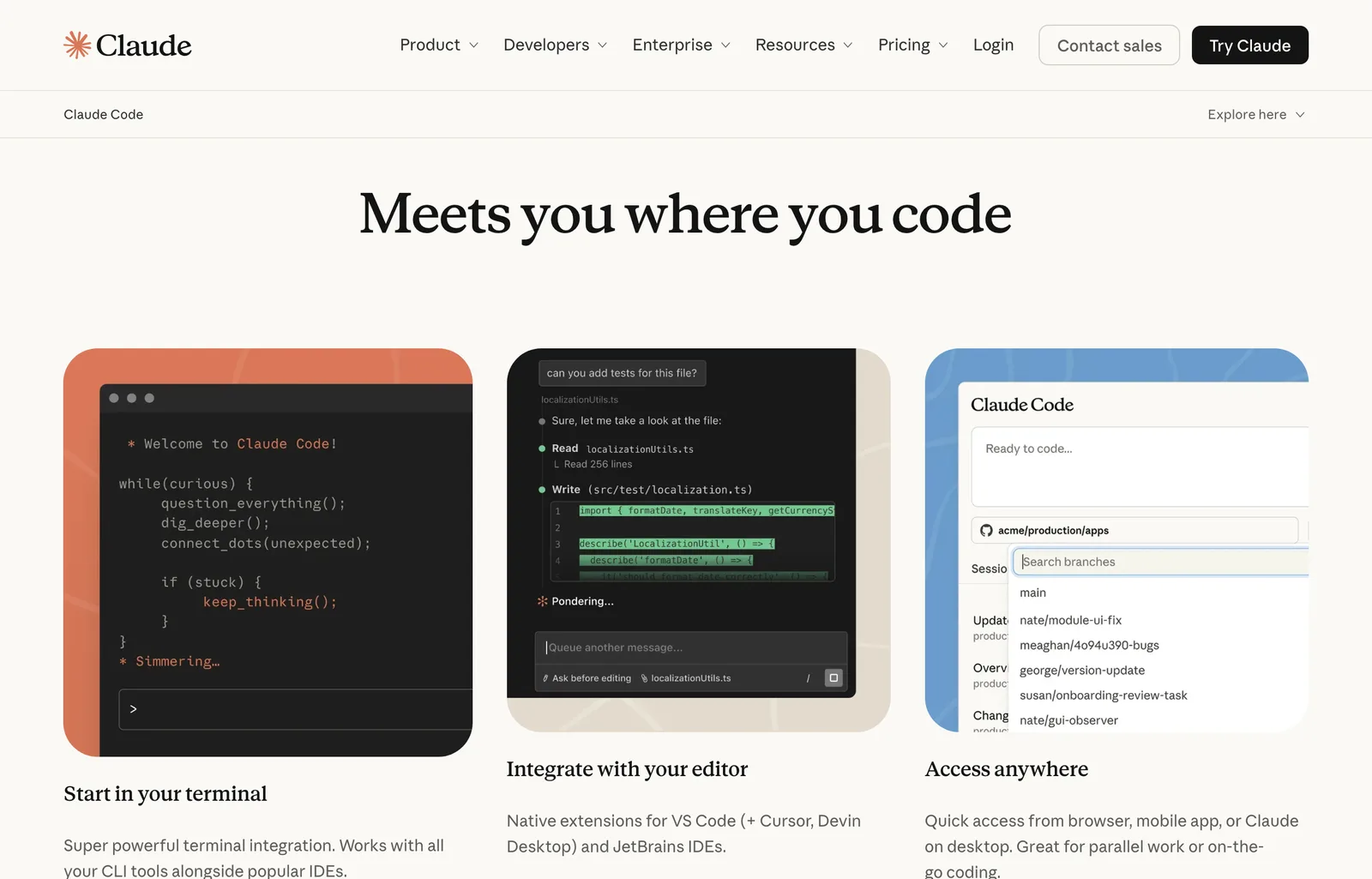
| Where you work | In the browser | Desktop app, terminal, VS Code or claude.ai/code |
| Price to start | Free plan; Pro from $25 a month for 100 credits | Claude Pro, $20 a month |
| How you pay | Credits for each change, plus 5 free build credits a day | Flat subscription with five-hour and weekly usage limits |
| Hosting | Built in, with a monthly hosting allowance on every plan | Your choice of host, including free static hosts |
| Custom domain | Pro and above | Whatever your host allows, free plans included |
| What it builds | New apps since May 2026 use TanStack Start (server code), with a built-in backend | Whatever you ask for, including plain static sites |
| Code | Yours; Git sync on every plan, editing code needs Pro | Plain files in your folder from the start |
| Best for | Apps with logins and data, built fast | Business websites you want to own and keep cheap |
What it costs to build and run a small site#
The two charge in completely different ways, which is why a straight price comparison misleads.
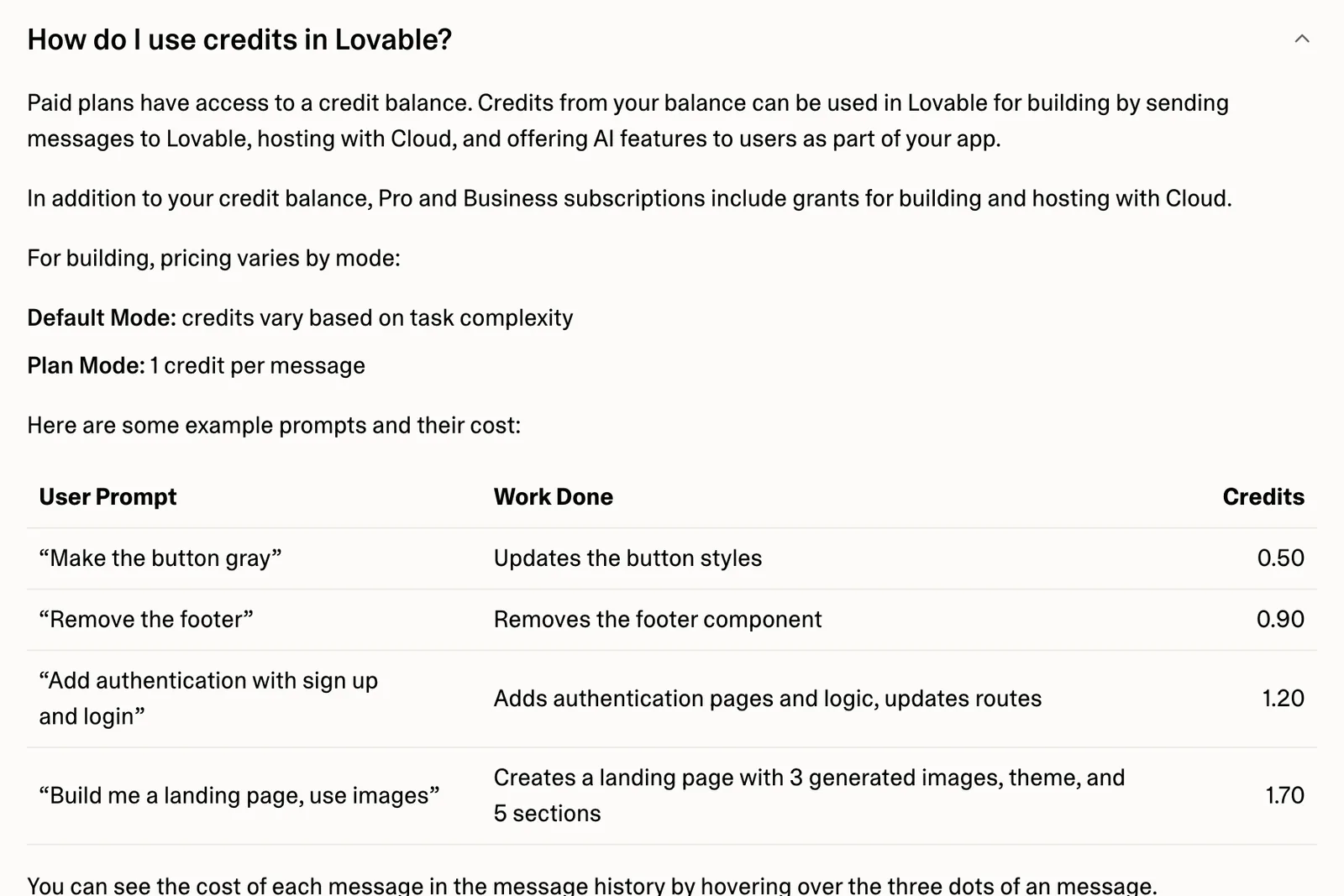
Lovable charges credits per change, and Pro starts at $25 a month (or $250 a year) for 100 credits, plus 5 daily build credits that don’t roll over. Its pricing page gives examples of what things cost: a button colour change is 0.50 credits, removing a footer 0.90, adding sign-in 1.20, and a landing page with generated images 1.70. Plan mode costs 1 credit a message.
So 100 credits goes a long way on small tweaks. On a page that keeps needing another go, it goes a lot less far, and nobody can predict that for you.
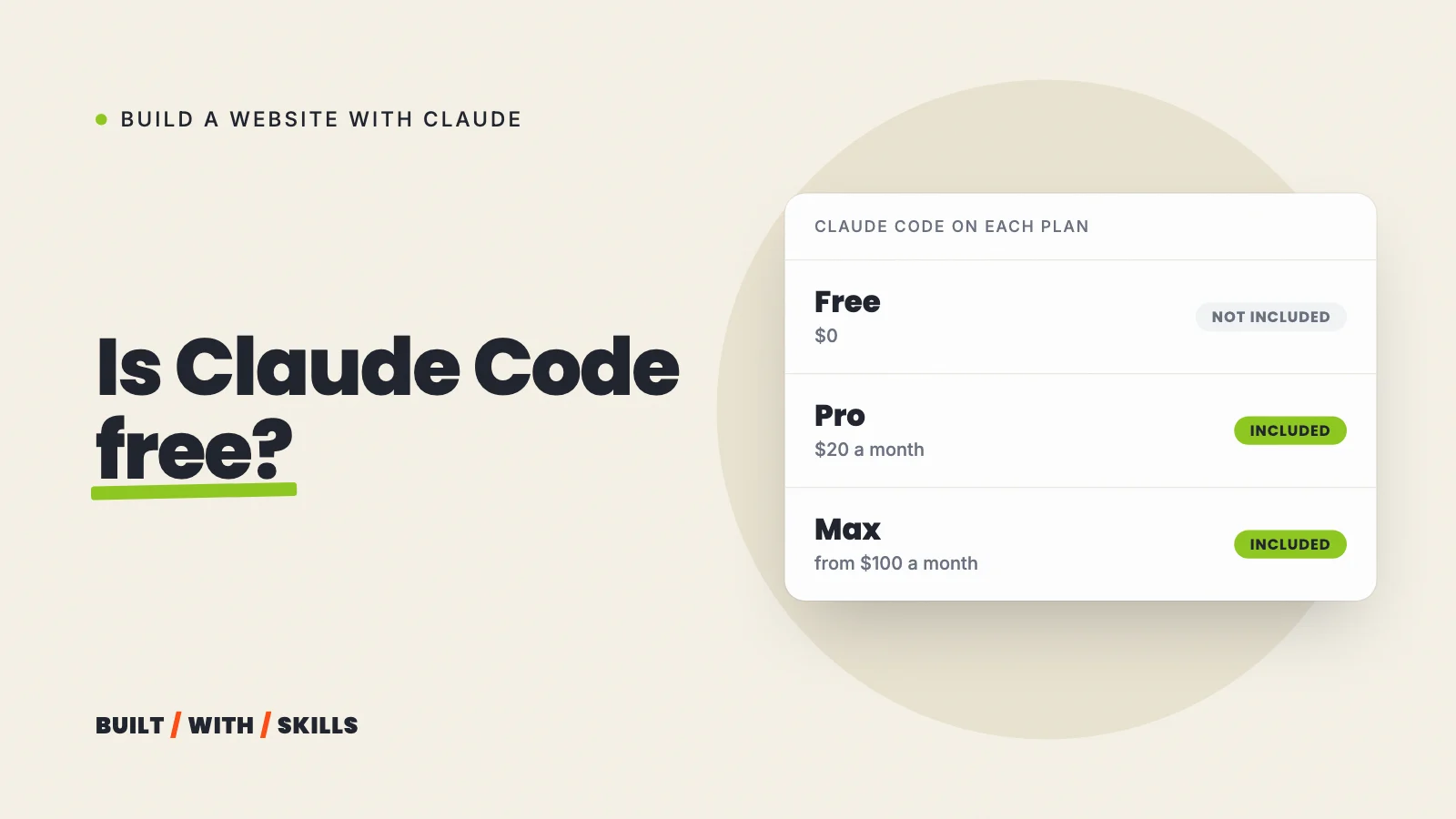
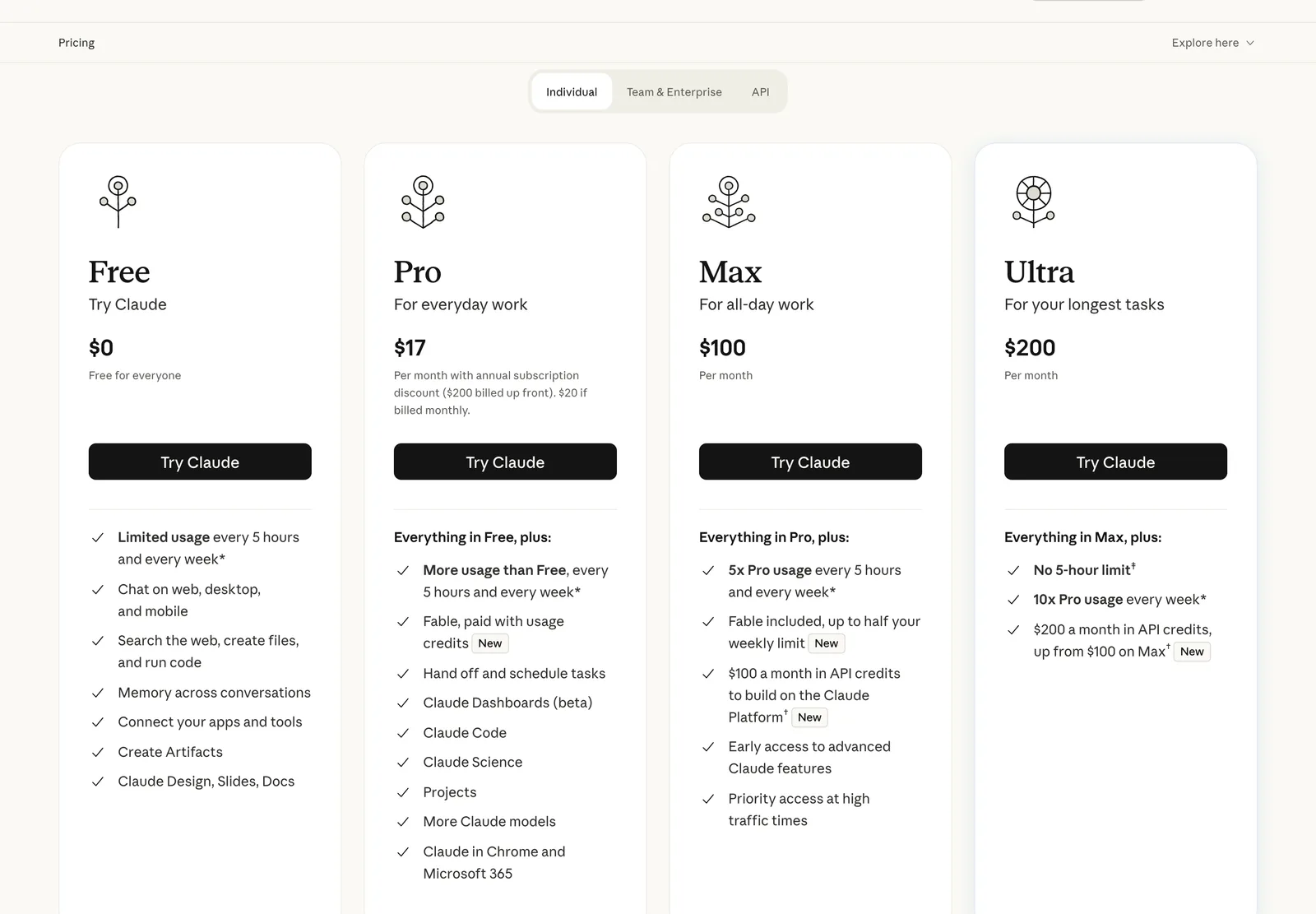
Claude Code comes with Claude Pro at $20 a month or $200 a year. There’s no charge per change; instead you get a usage allowance that resets every five hours, with a weekly cap on top, and when you run out you wait or pay for more. Is Claude Code free? has every plan and how the limits behave.
Here’s how a year looks if the build takes two months and the site then sits mostly unchanged:
| Lovable Pro | Claude Code with Claude Pro | |
|---|---|---|
| The build (two months) | $50 | $40 |
| Hosting | Included; the monthly allowance covers most small apps | $0 on a free static host such as Cloudflare |
| Domain | Yours to buy either way | Yours to buy either way |
| Changes after launch | Credits, so Pro (or free daily credits, without code editing) | Pro for the months you need it |
The two-month build is an assumption for comparison, not something we’ve measured.
What happens when you stop paying#
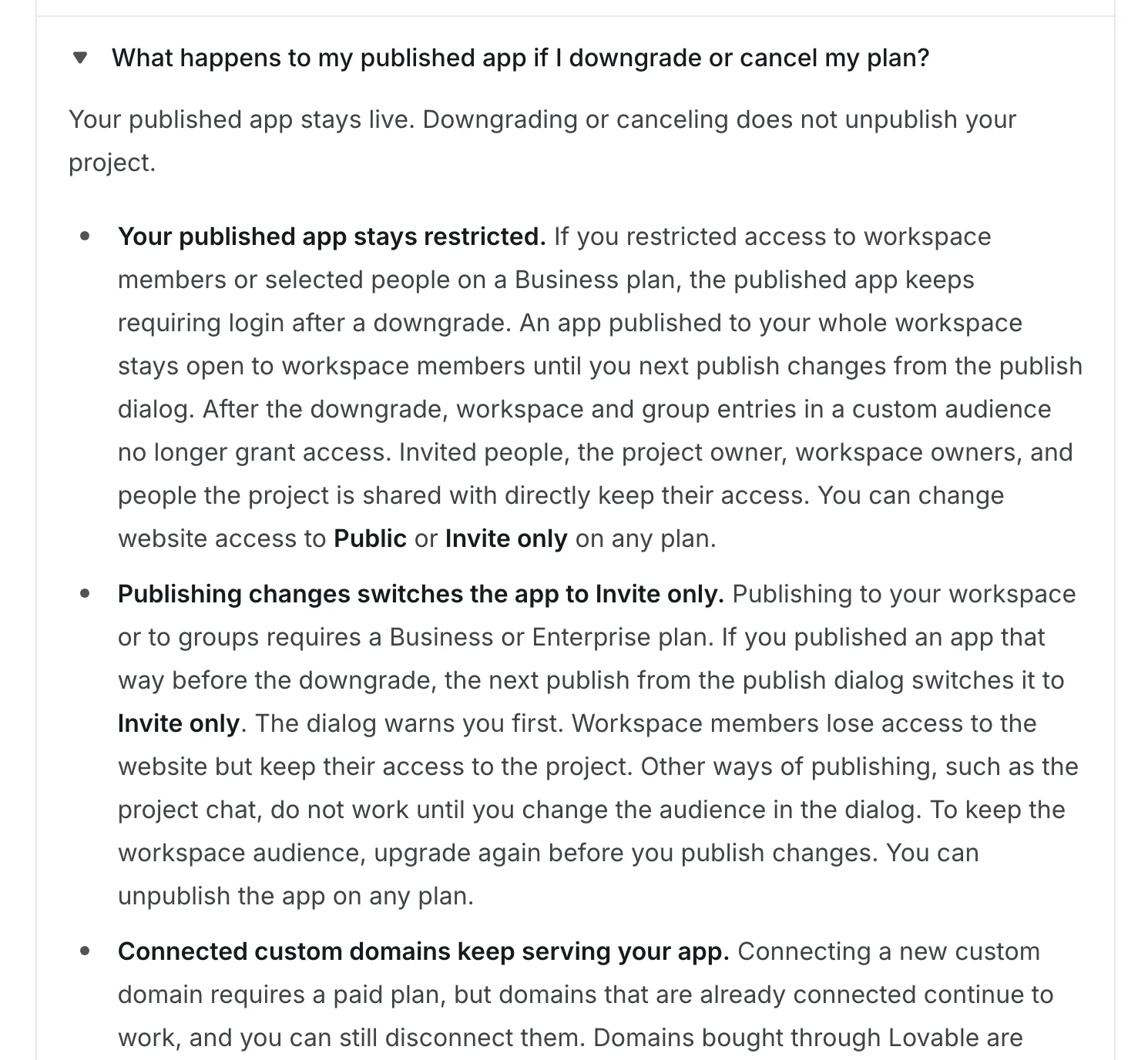
Less than you might fear, on either side. Lovable’s docs say a published app stays live after you drop to Free and a domain you’ve already connected keeps serving it. What you lose is connecting new domains, editing code inside Lovable and the badge removal.
Apps that use Lovable’s built-in backend or AI features still need credits to serve requests, though. And a Free project with no custom domain can be unpublished after 12 months without visits or owner logins.
A static site built with Claude Code has none of that to worry about. Cancel Claude and the site keeps running exactly as it was, because nothing on it talks to Claude.
Where Lovable is the better choice#
Lovable is built for one job: getting an app working in a browser fast.
Sign-ups, a database, file storage and a dashboard come from its built-in backend, and publishing is one click. That’s plumbing which would take a beginner days to set up with Claude Code. If you’re testing whether anyone wants an app idea, that speed matters more than anything else on this page.
It’s gentler on day one, too. There’s nothing to install and no folder to manage, and the free plan’s daily credits let you try it properly before paying.
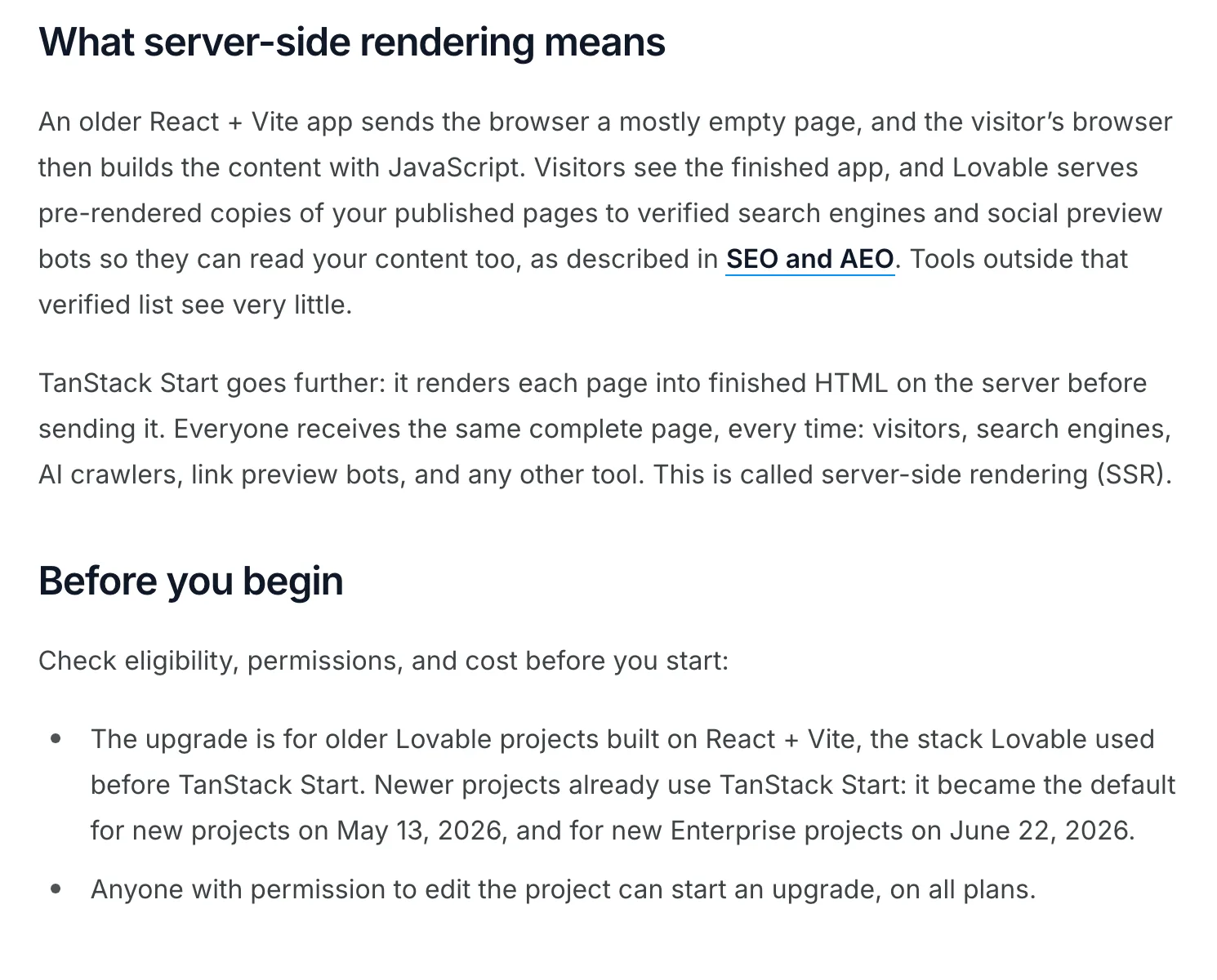
Lovable has also fixed the weakness older comparisons used to lean on. New apps since 13 May 2026 render their pages on the server, which Lovable says improves search visibility and link previews, so the old worry that search engines see a blank page no longer applies to new projects.
For an app prototype with logins and data, Lovable wins.
Where Claude Code is the better choice#
A business website has a different job from an app. It has to load fast, get read by Google, cost next to nothing and stay put for years while you change the words now and then.
That’s where Claude Code pulls ahead, for four reasons:
- It can build a plain static site. Ask for one and any free static host can serve it. New Lovable apps run server code, so they need a host that runs it, whether that’s Lovable’s own or one you set up.
- Changes don’t cost credits. Fixing a typo, rewording a paragraph or adding a page all come out of the same flat allowance, which suits a site you’ll keep tweaking.
- The files were always yours. You can leave Lovable too, and its docs say plainly that you’re never locked in. But what you take with you is an app built around its stack and backend, whereas a Claude Code site is a folder of files that runs anywhere.
- It suits writing. A business site lives on its words. Claude Code works on those pages as ordinary files you can read, and skills like Humanizer keep the copy sounding like you rather than like AI.
For a business website you want to own, Claude Code wins.
Using both#
You don’t have to pick one. Lovable’s Git sync runs both ways with GitHub, GitLab or Bitbucket on every plan, so you can start a project in Lovable, open the same repository in Claude Code for the detailed work, and see those changes back in Lovable. That’s handy when someone on your team likes Lovable’s visual editor and you’d rather not spend credits on the fiddly fixes.
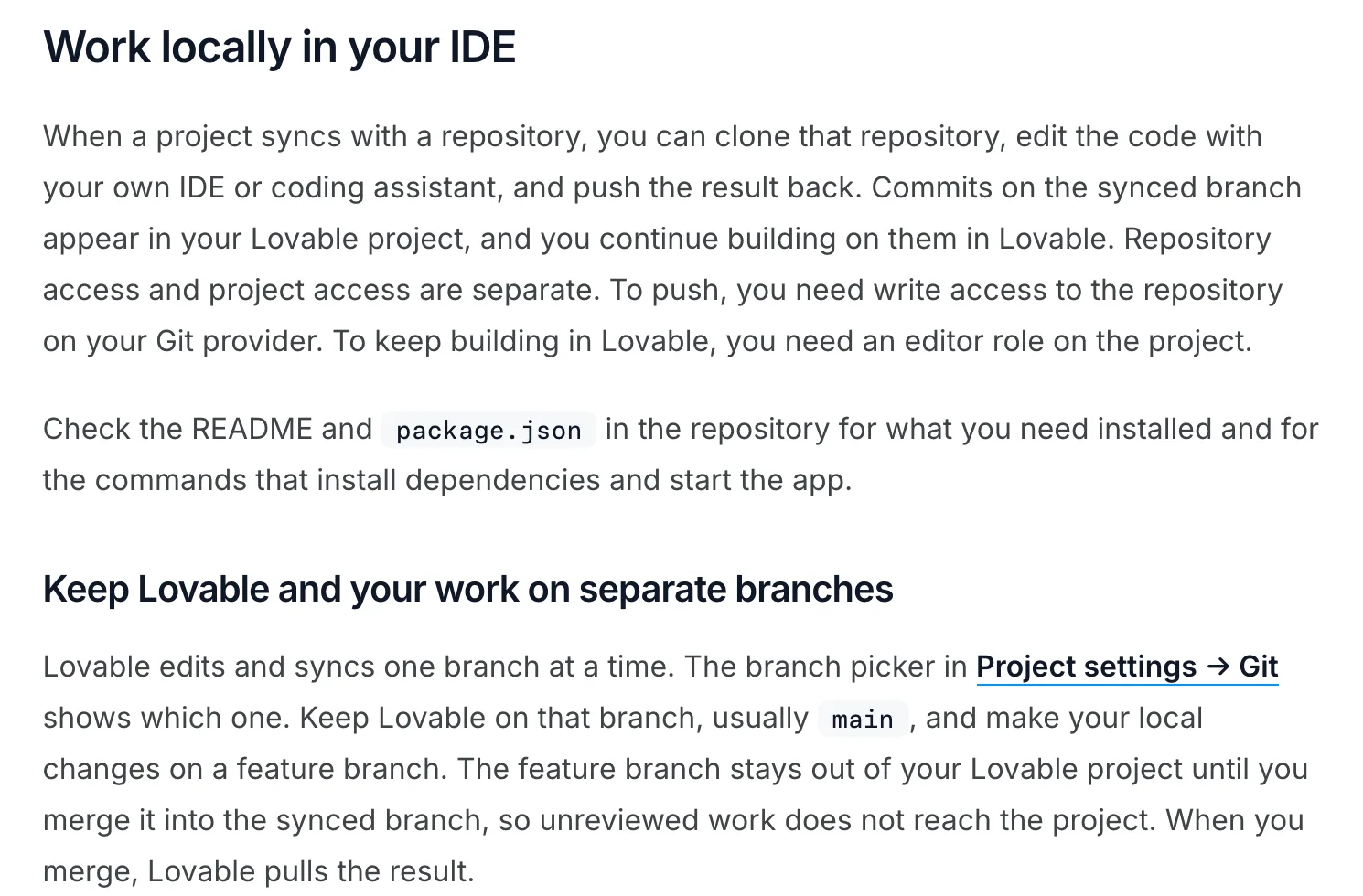
git clone https://github.com/you/your-lovable-app.gitcd your-lovable-appgit switch -c claude-fixesclaudemake your changes, then commit and push the branchmerge it into the synced branch and Lovable pulls the resultWe haven’t tried this ourselves. If you do, keep in mind that the app is still built on Lovable’s stack, and Lovable’s own docs say its hosting and built-in backend are where the platform delivers the most value.
Our pick#
Want a website for your business that people find on Google and that costs almost nothing to keep online? Use Claude Code. The first evening takes longer than it would in Lovable, but after that changes cost no credits and the hosting is free.
Building an app with accounts and a database to test an idea this month? Use Lovable, and sync it to GitHub from day one so you keep your options open.
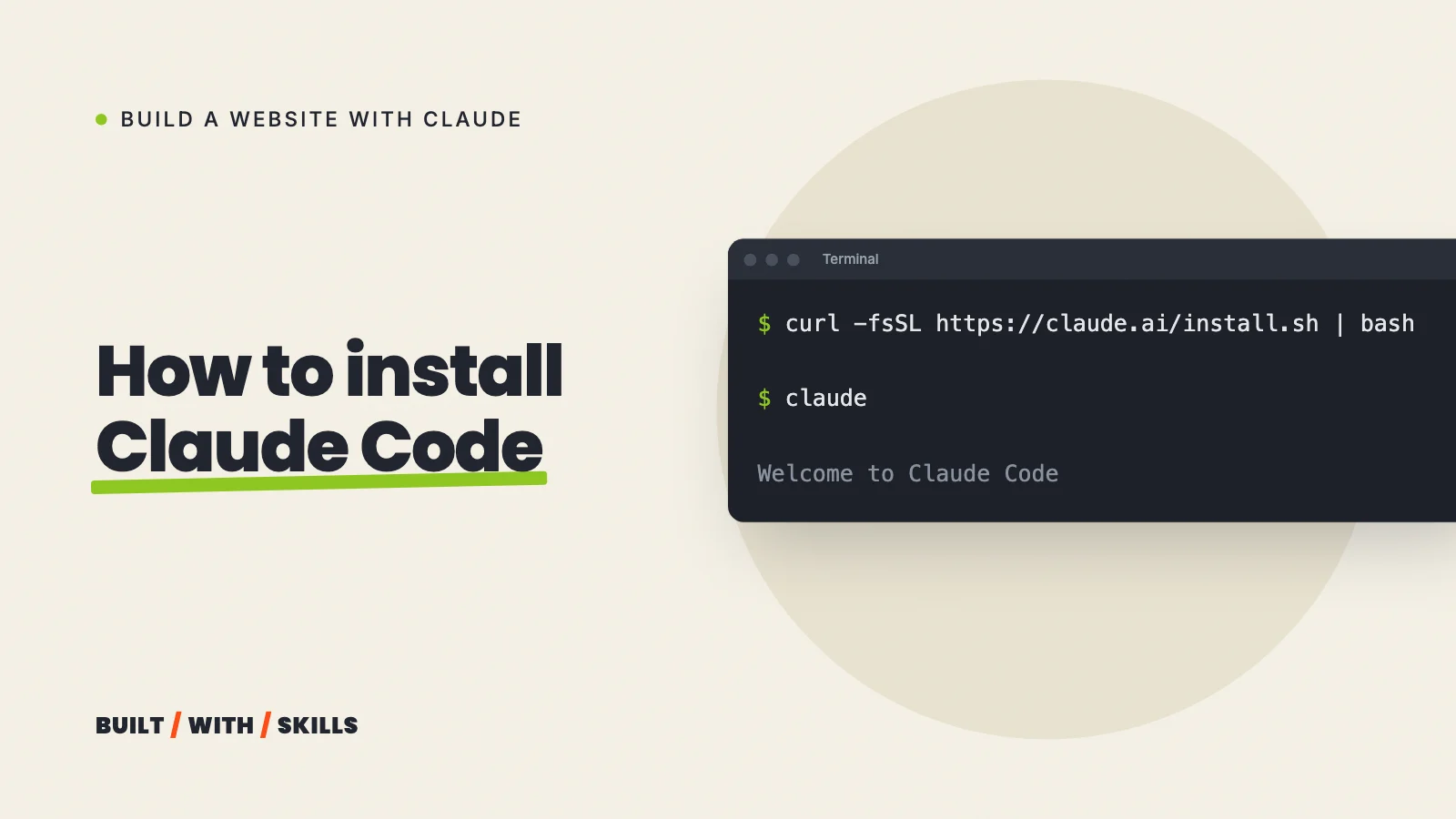
Our step-by-step guide to building a website with Claude walks you through the Claude Code route, and how to install Claude Code covers the part that scares people most.