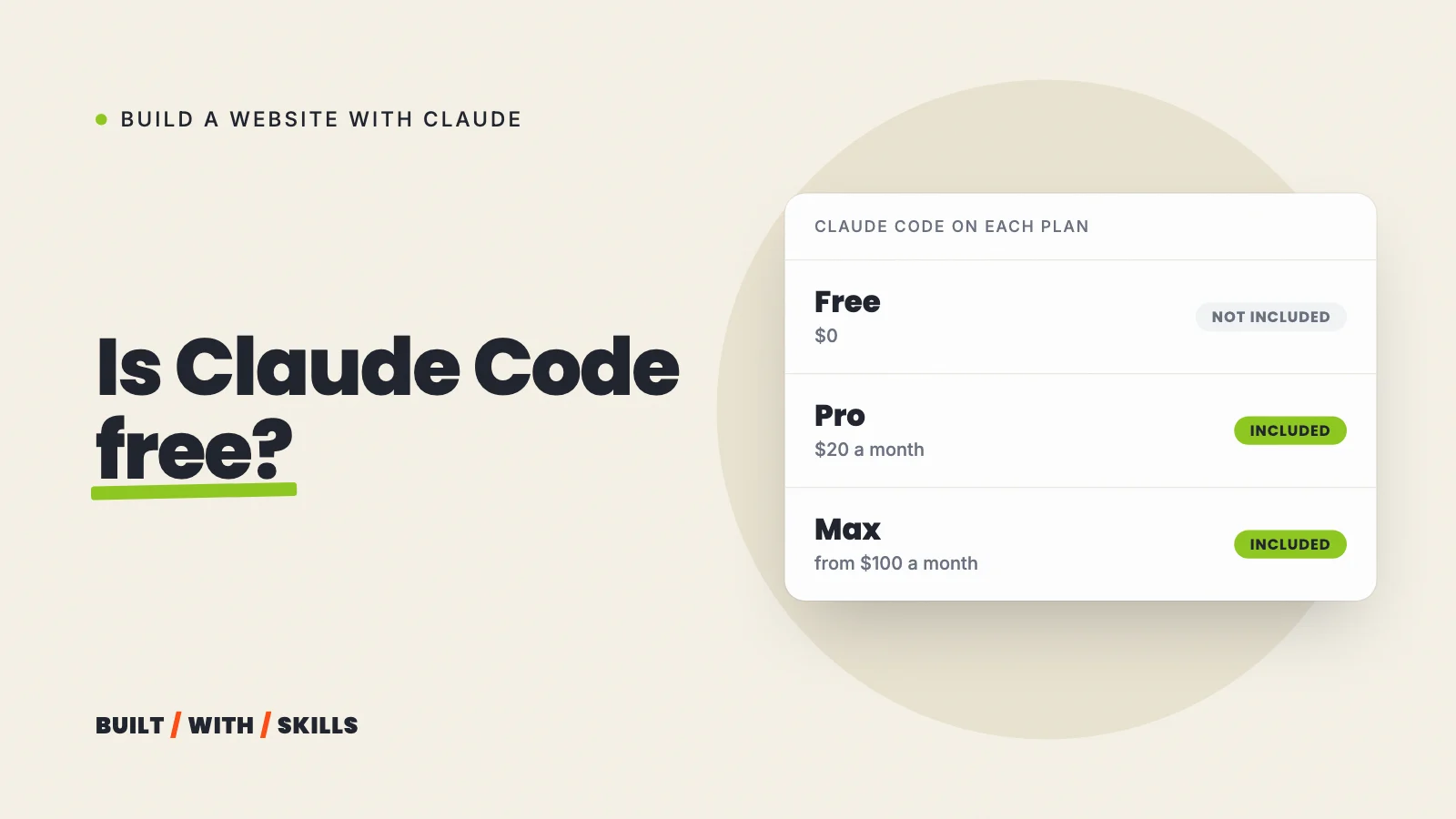

No, Claude Code isn’t on Claude’s free plan, and there’s no free trial for individuals either.
You need a Pro, Max, Team or Enterprise plan, or a Claude Console account that you top up with credit and pay for by the token. The cheapest of those is Pro, at $20 a month. That’s enough to build a small website and find out whether this way of working suits you before you spend more.
Below you’ll find every plan priced, how the limits behave when you hit one, the setting that can quietly bill you twice, what a website costs from start to finish, and the free workarounds. Every price comes from Anthropic’s pricing page as of October 2026, in US dollars, and your local price may differ with tax.
What each Claude plan costs#
| Plan | Price | Claude Code |
|---|---|---|
| Free | $0 | Not included |
| Pro | $20 a month, or $200 a year (about $17 a month) | Included |
| Max 5x | $100 a month | Included, five times Pro’s usage per session |
| Max 20x | $200 a month | Included, twenty times Pro’s usage |
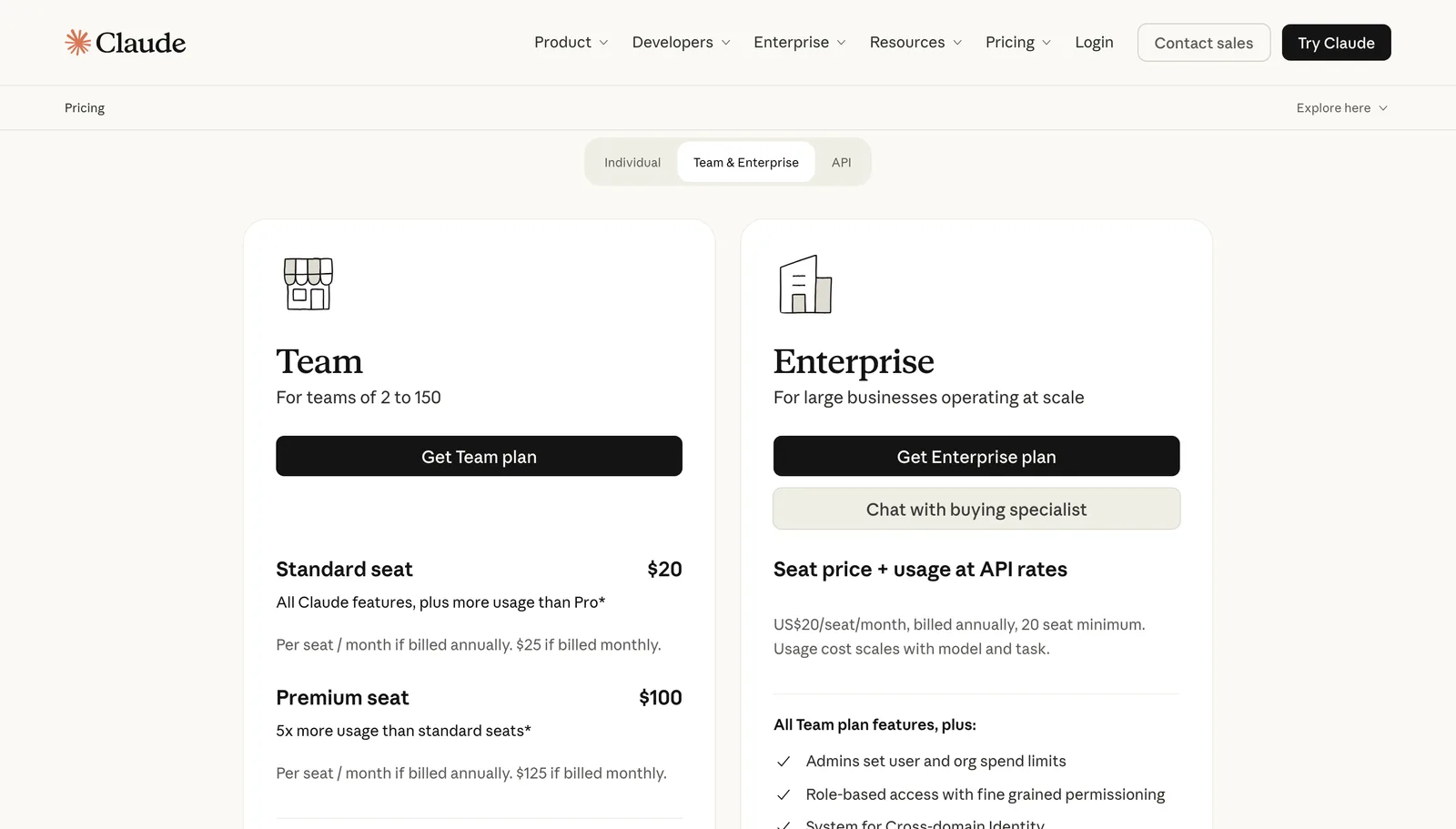
| Team, standard | $25 a seat a month, or $20 billed yearly | Included, more usage than Pro |
| Team, premium | $125 a seat a month, or $100 billed yearly | Included, five times a standard seat |
| Enterprise | $20 a seat a month, billed yearly, 20-seat minimum, plus usage at API rates | Included |
| Claude Console | Pay per token | Included, billed by use |
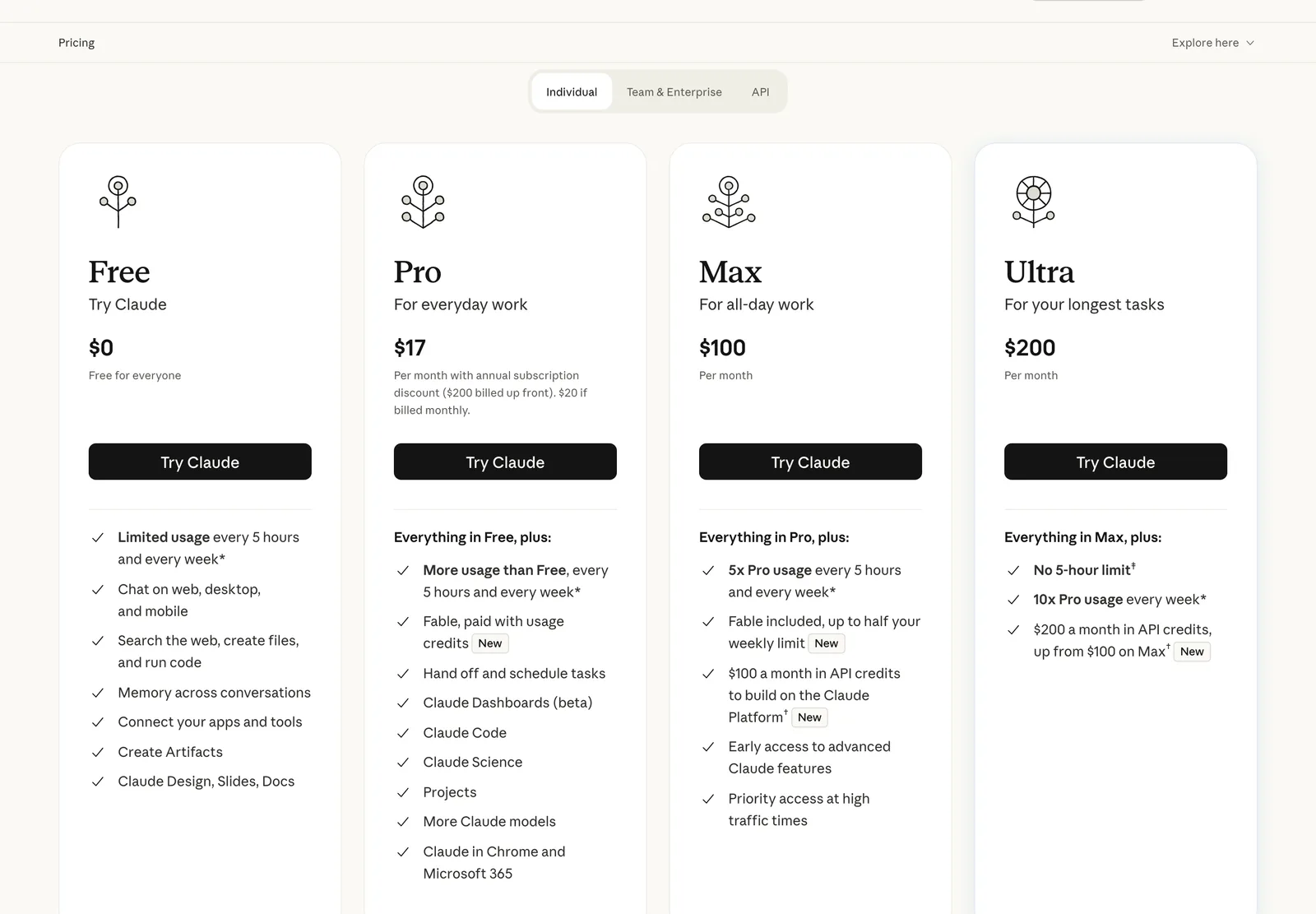
Two details on that page are easy to miss. Max now comes with $100 or $200 a month in API credits for building on the Claude Platform. That helps if you write software that calls Claude; it does nothing for a website.
Team is for groups of 2 to 150 people, so it isn’t a cheaper Pro for one person.
So which one should you pick?
If you’re one person building a site for your own business, start on Pro. You can upgrade mid-month if the limits get in the way, and dropping back down after the build costs you nothing.
How the usage limits work#
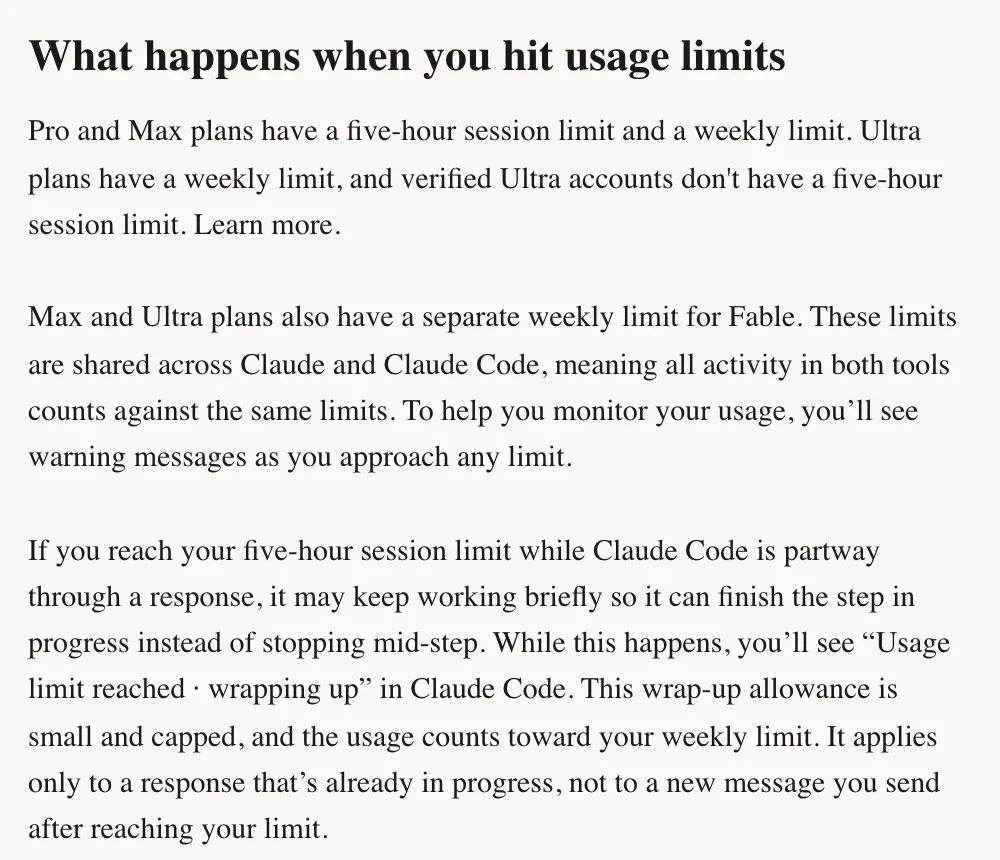
No paid plan gives you a fixed number of messages. Instead, Pro and Max each have a five-hour session limit and a weekly limit on top, according to Anthropic’s help article on Claude Code with Pro and Max, and Max adds a separate weekly limit for the Fable models.
Your chats on claude.ai draw from the same allowance as Claude Code. That catches people out, because an afternoon spent drafting copy in the chat leaves less for the build that evening.
What does hitting the limit look like? If it happens halfway through a reply, Claude Code finishes the step it’s on, shows Usage limit reached · wrapping up and stops taking new messages until the window resets.
Annoying in the middle of a fiddly page. Harmless, though. From there you have four options:
- Wait for the reset.
- Turn on usage credits, which bill whatever you use past the limit at standard API rates.
- Upgrade (Pro to Max 5x, or Max 5x to Max 20x).
- Switch to a Console account and pay by the token.
Type /usage in a session to see how much of your plan you’ve used, so the limit doesn’t arrive as a surprise. Starting each new task with /clear helps too, because a long conversation sends more back and forth with every message.
> /usageTotal cost: $0.55Total duration (API): 6m 20sTotal duration (wall): 6h 33m 10sTotal code changes: 0 lines added, 0 lines removedUsage by model: claude-sonnet-4-6: 1.2k input, 5.3k output, 940.0k cache read, 50.0k cache write ($0.55)Paying per token instead#
The other route skips the subscription. You sign in with a Claude Console account and pay for what Claude Code reads and writes, priced per million tokens (a token is roughly three-quarters of a word).
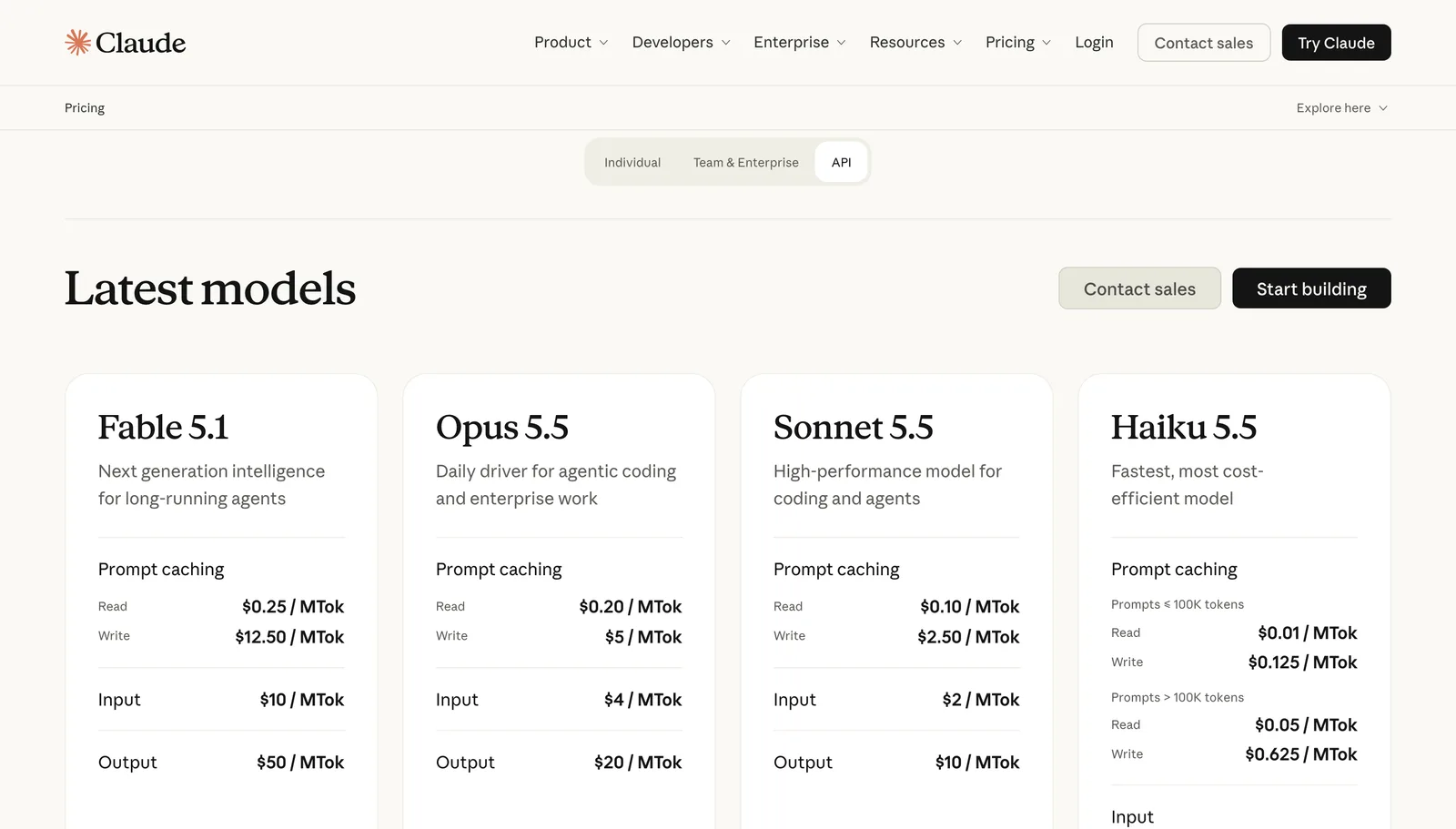
| Model | Input per million tokens | Output per million tokens |
|---|---|---|
| Haiku 5.5 | $0.10 | $0.50 |
| Sonnet 5.5 | $2 | $10 |
| Opus 5.5 | $4 | $20 |
| Fable 5.1 | $10 | $50 |
Haiku’s price is for prompts up to 100,000 tokens; longer ones cost $0.50 in and $2.50 out.
Those numbers look tiny. They aren’t, in practice, because a coding session sends your project’s files back and forth with nearly every message.
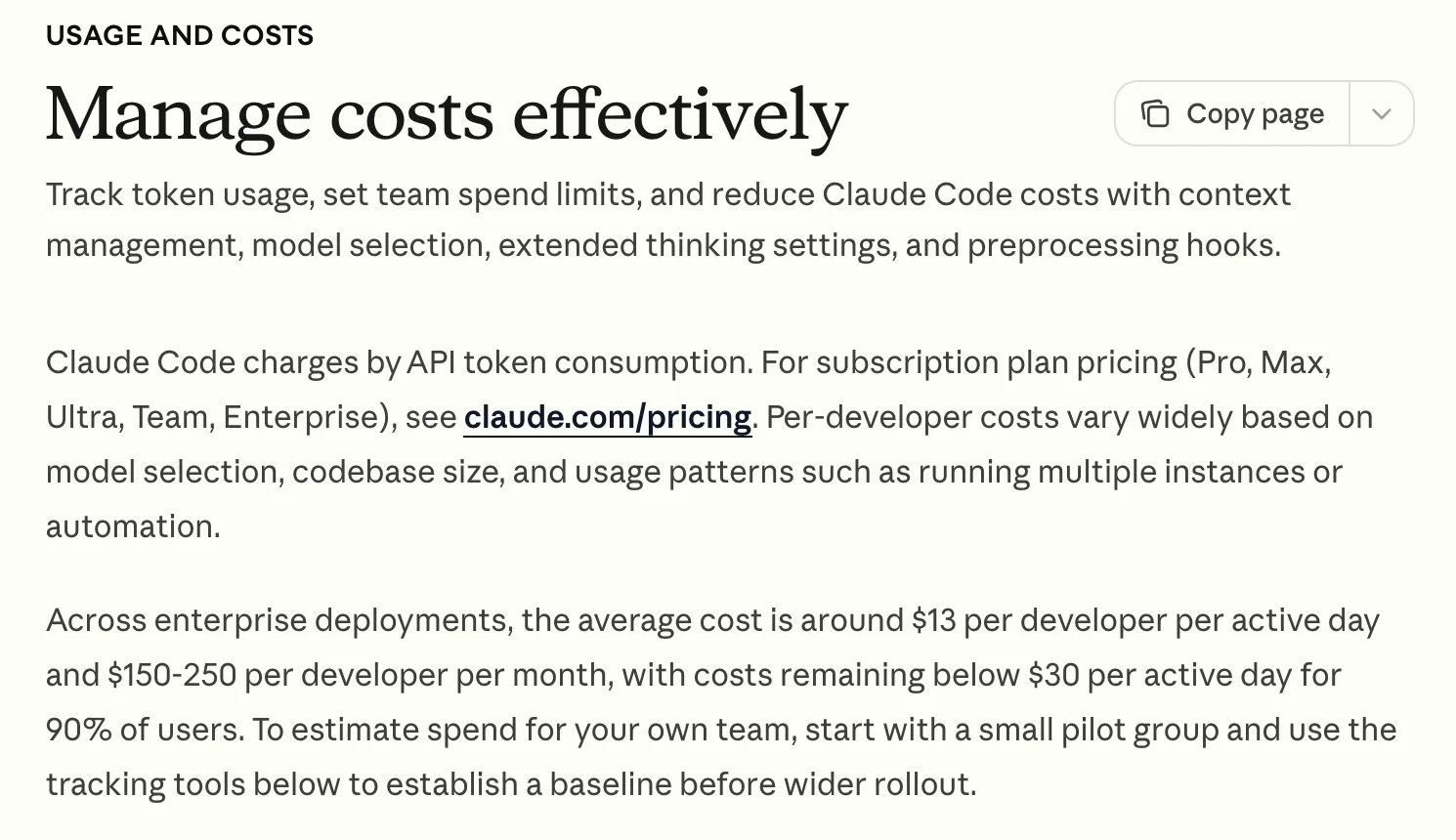
Anthropic’s own costs page puts the average across its enterprise customers at around $13 per developer per active day and $150 to $250 a month. Professional developers use it harder than someone building one website, but it gives you the scale.
For a website, the $20 subscription is cheaper and far easier to predict.
The API key trap#
This one costs people money without them noticing.
If an ANTHROPIC_API_KEY is set on your computer (an old tutorial may have had you add one), the terminal version of Claude Code asks once whether to use it and then remembers your answer. Say yes, and it bills that API account by the token while your subscription sits there unused.
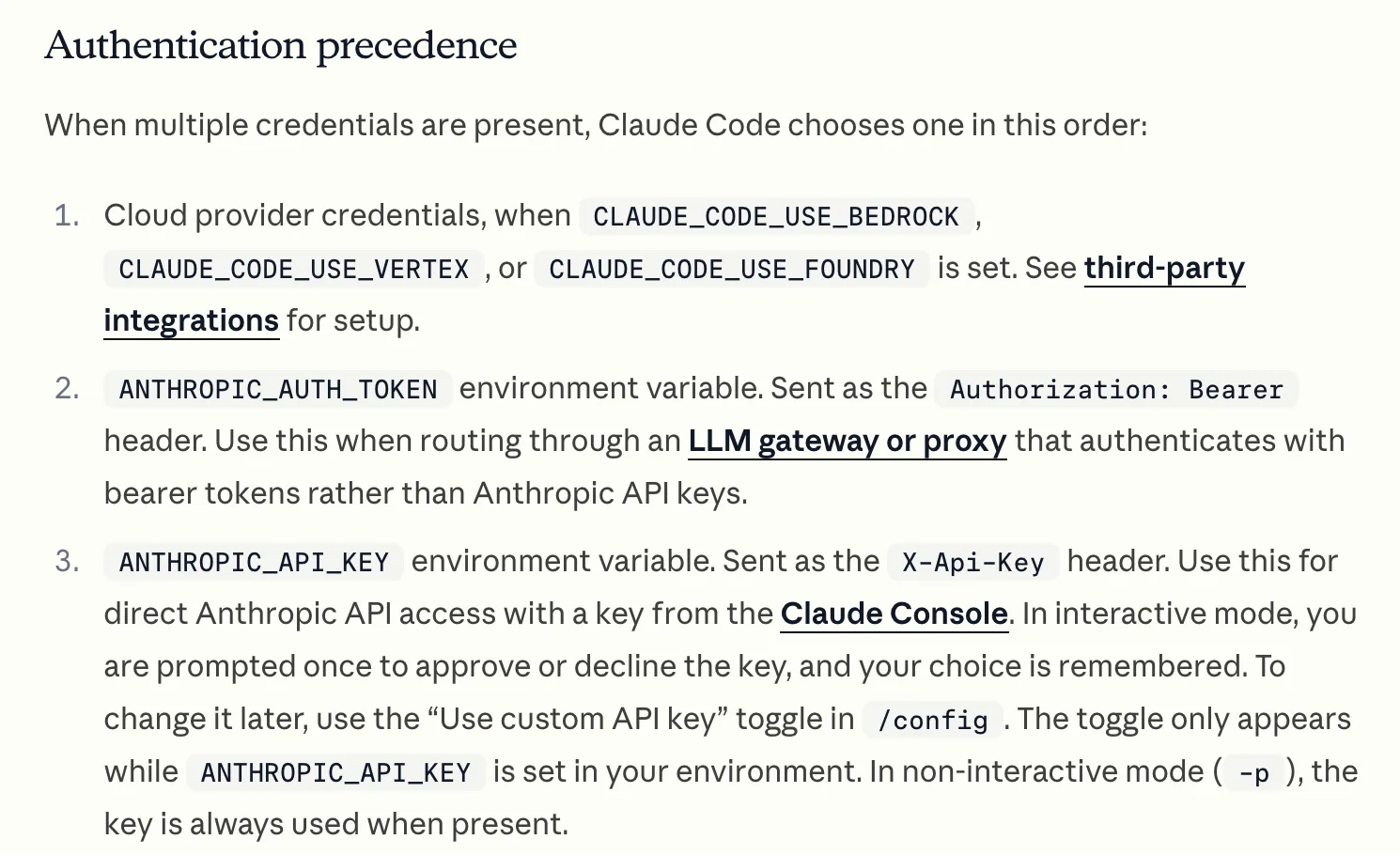
So say no to that question if you’re on a plan.
Not sure which one you’re using? Type /status, which shows the active sign-in and marks the one that isn’t in use.
To switch back later, use the “Use custom API key” toggle in /config, or remove the key with unset ANTHROPIC_API_KEY. The desktop app doesn’t read that setting at all, which is one more reason beginners are better off starting there.
unset ANTHROPIC_API_KEYclaude> /statusshows the sign-in in use, and marks any credential that isn'tWhat a website costs to build with Claude Code#
Here’s the whole bill for a small static business site:
| Item | Cost |
|---|---|
| Claude Pro, while you build | $20 a month |
| A domain | The registry’s price if you buy at cost (see below) |
| Hosting on Cloudflare’s free plan | $0 |
| First year, with two months of Claude | $40 plus the domain |
Cloudflare’s registrar charges only what the registry and ICANN charge, with no markup, so it’s usually the cheapest place to keep a .com; it shows the exact price when you search for a name.
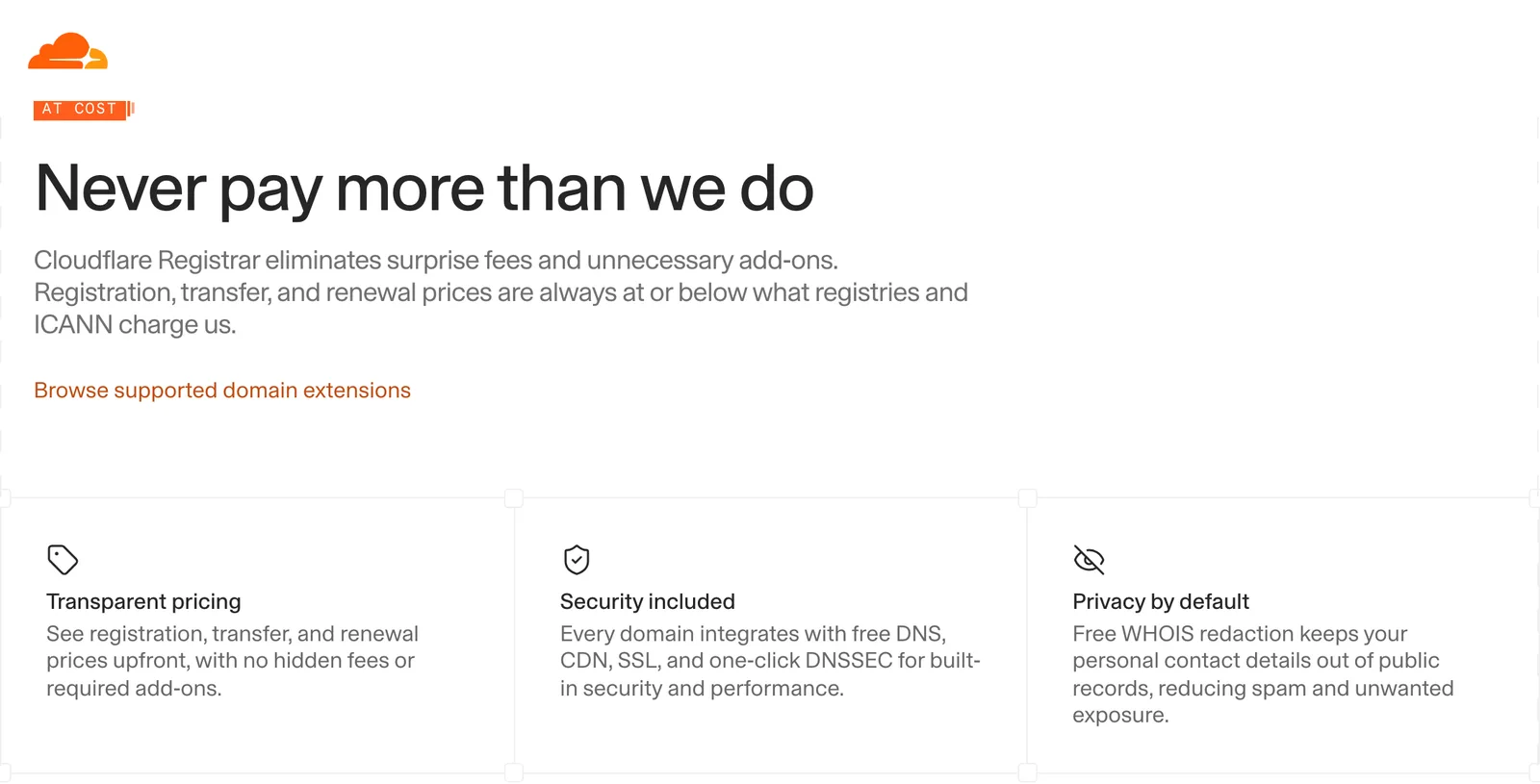
Two months of Claude is our assumption, not a measurement. Some people will need one, and some will want longer.
Once the site is live you can keep Claude for changes or cancel it, and the site stays online either way, because you own the files and the host serves them. Compare that with a hosted website builder, where you pay every month for as long as the site exists and moving away usually means starting again.
With Claude Code, you pay for the build, not forever.
Can you use Claude Code for free?#
Sort of, and only one of the routes gives you Claude doing the work.
An employer’s plan. Team and Enterprise seats include Claude Code, so if your company already pays for Claude you may have it today. Read your company’s rules before you use it for anything personal.
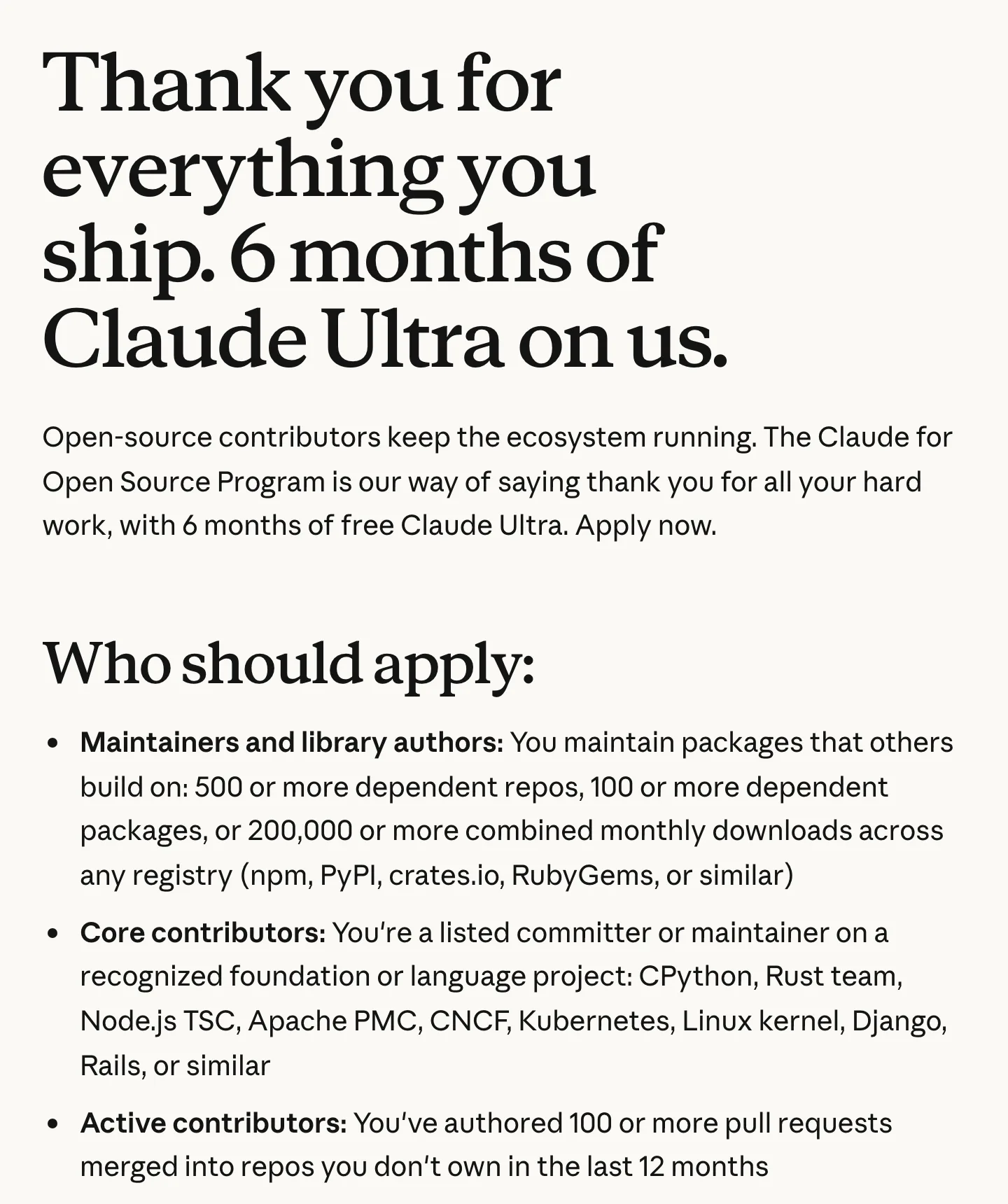
Anthropic’s open-source programme. Claude for Open Source gives qualifying maintainers six months of Max 20x free. The bar is real (for example, a package with at least 200,000 combined monthly downloads, or 100 merged pull requests to other people’s projects in the last year), so it’s for people who already maintain software, not for a first website.
Ollama. This is the free route most guides mean. Ollama runs open AI models, and its Claude Code integration points Claude Code at those models instead of Anthropic’s, either with the command ollama launch claude or by setting Claude Code’s ANTHROPIC_BASE_URL to your local Ollama server.
You keep Claude Code’s tools, but an open model does the thinking. Ollama’s docs also ask for a context window of 64,000 tokens or more, which takes a computer with plenty of memory.
Worth an evening if you’re curious. For a first website, where you need the model to get things right because you can’t yet spot when it hasn’t, we’d pay for Pro.
ollama launch claudeor set it up by hand, pointing Claude Code at your local Ollama serverexport ANTHROPIC_AUTH_TOKEN=ollamaexport ANTHROPIC_API_KEY=""export ANTHROPIC_BASE_URL=http://localhost:11434claude --model qwen3.5local models need a context window of 64k or moreThe free Claude chat. It isn’t Claude Code, but it can make a single page as an artifact and publish it to a Claude link. Fine for a quick one-off page, though not for a site on your own domain; what each part of Claude can build goes through the differences.
What it costs to keep running#
Very little. A static website built with Claude Code has two running costs: the domain renewal each year and the hosting, which stays free within the free plan’s limits.
But read the host’s terms before you put a business on a free plan, because they differ:
- Vercel’s free Hobby plan is for personal, non-commercial use only, and Vercel counts “advertising the sale of a product or service” as commercial.
- GitHub Pages says it isn’t intended for or allowed to be used as free hosting “to run your online business”.
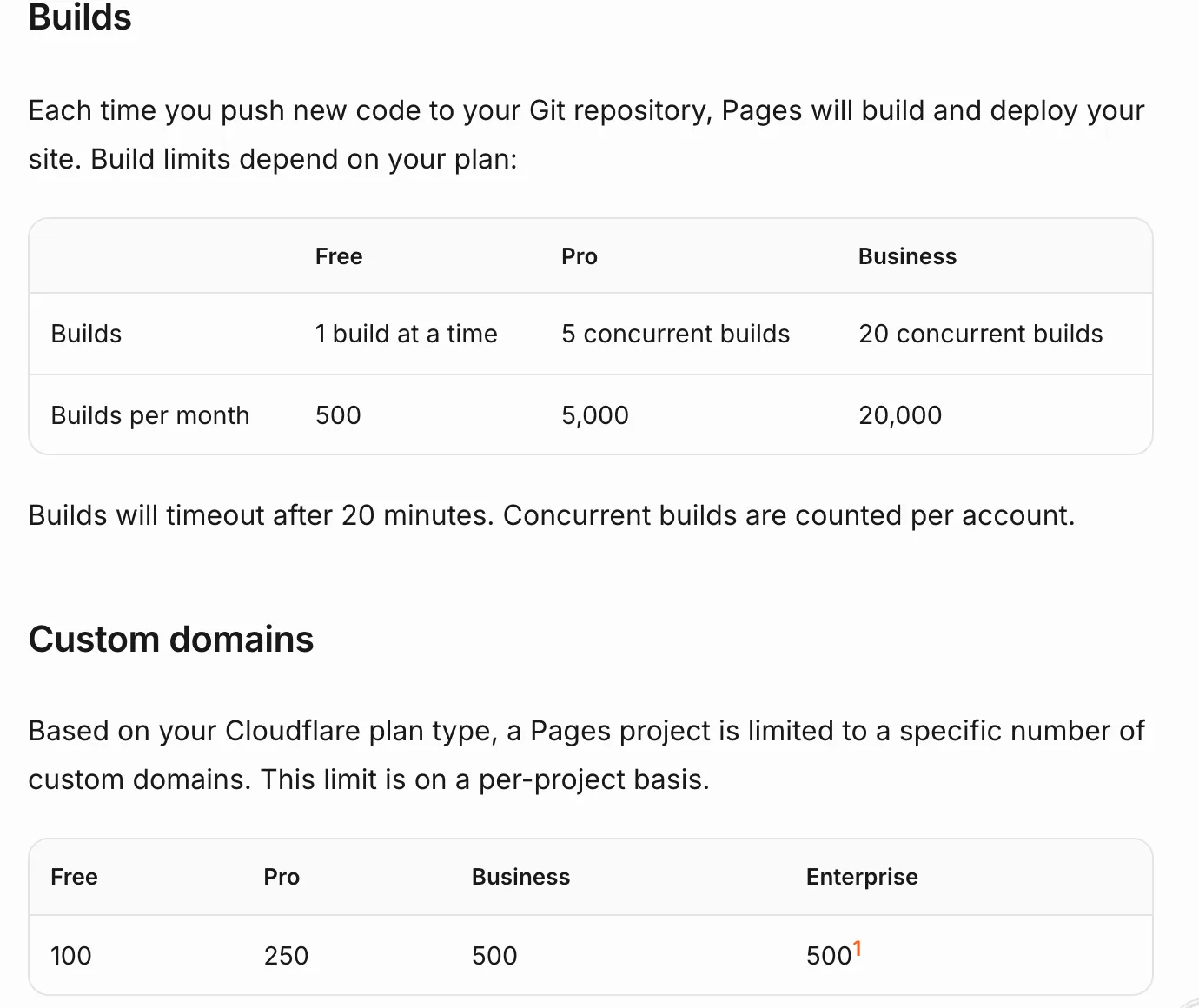
- Cloudflare Pages lists its free limits (500 builds a month, up to 20,000 files a site) with no personal-use-only clause like the other two.
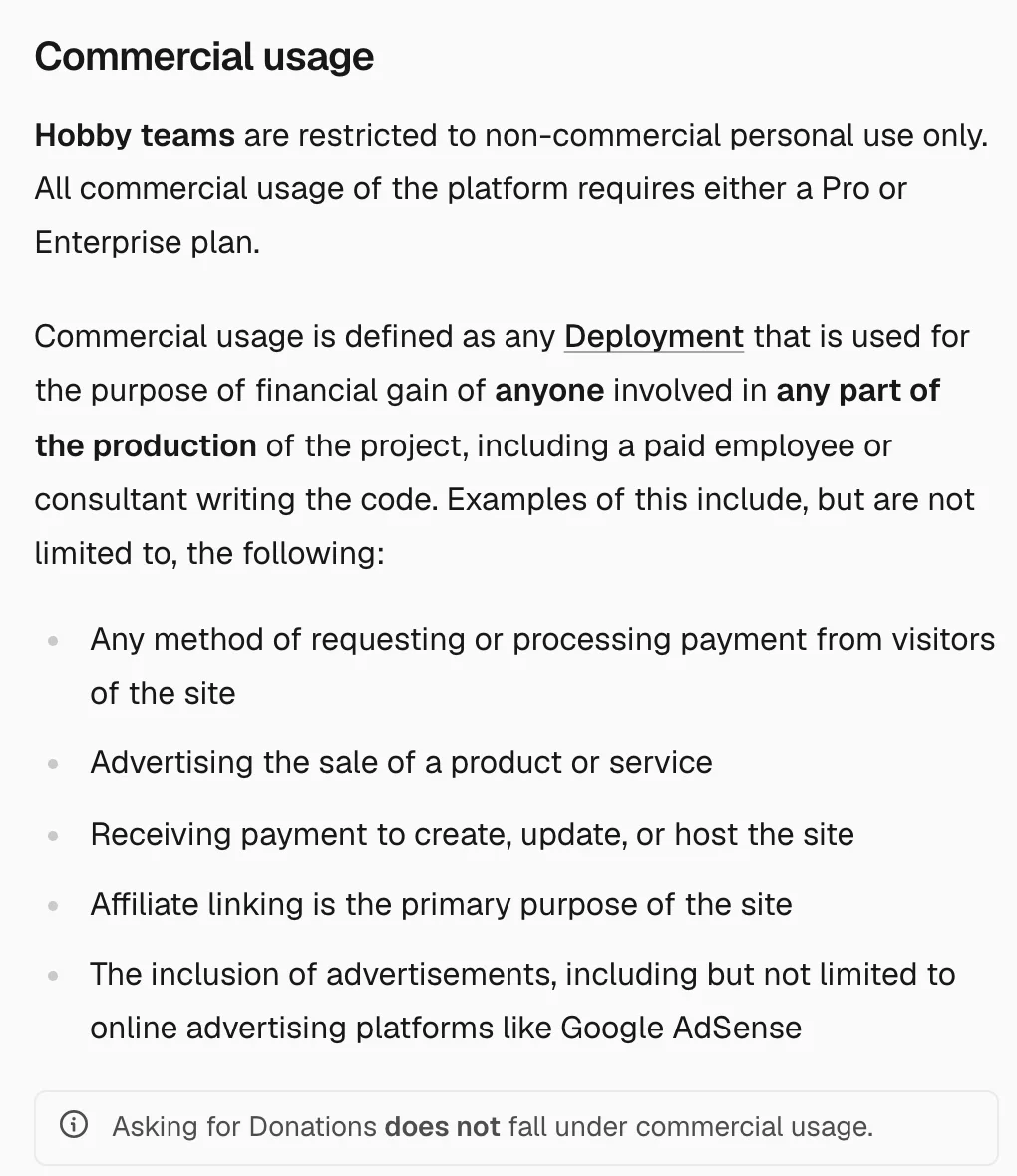
That’s why we point business sites at Cloudflare. Of the three free plans, it’s the one whose terms leave room for a business, and its limits are far beyond what a small site needs.
So the real cost of Claude Code for a website is a month or two of Pro and a domain. The full build, step by step takes you from an empty folder to a live site.